



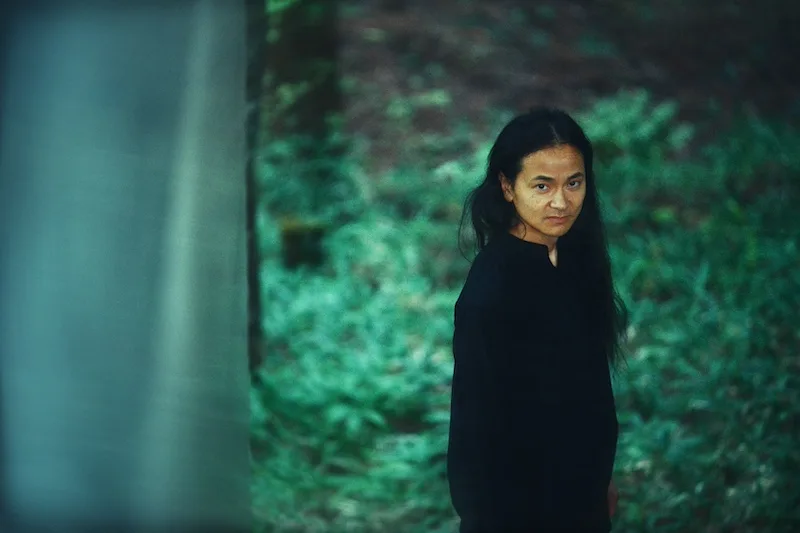
Japanese artist Masayoshi Fujita has released the title track from his forthcoming album, Forest of Tranquility, which is set for release on 13 November via Erased Tapes.
Speaking about the track, Fujita states: “This song was the opener of the day. The feeling of birth, a soft beginning of a day in the forest.”
The album Forest of Tranquility developed from a commission for Expo 2025, where Fujita was invited to create the soundtrack for a living nature installation. This installation featured a central pond and 1,500 trees, repurposed from Expo’s former 1970 site and other parks in Osaka. Fujita aimed to create a relaxing public space for visitors to the Osaka event, which ran for six months. He sought to deepen the listener’s connection to the natural world through dynamic shifts and gentle arcs in the music, mirroring the surrounding forest with non-linear patterns and textural elements.
Fujita’s music on Forest of Tranquility is described as gentle, intended to blend with its environment, similar to the kankyō ongaku (environmental music) of Japanese pioneers such as Hiroshi Yoshimura, Midori Takada, and Haruomi Hosono.
The album follows Fujita’s 2024 release, Migratory LP. On Forest of Tranquility, Fujita uses acoustic instruments including marimba, vibraphone, and percussion. The album also features Armenian duduk from Hayk Karoyi and Japanese shō from Mattias Hållsten. Field recordings of birds and frogs are incorporated into the soundscape, alongside atmospheric drones and white noise. Fujita notes that he “wanted to have a lot of space in between the sounds.”
Fujita moved to rural Japan in 2020 after living in Berlin for 13 years. He now resides in a mountain village along the coast of Kami-cho, Hyōgo, working from a former kindergarten.
Forest of Tranquility features seven tracks, each designed to shift in tone according to the time of day. Fujita explains the concept behind the original commission: “They had a biorhythm – in the morning you start a little bit slowly and with a little bit more space, and then around noon you get a little bit more active. Then in the afternoon you get more settled and calm, and around 6 o’clock you are more active, before revisiting calm.”
Fujita describes his image of nature as “a portal to the universe.” He adds: “The idea I have lately about nature is that it makes us aware of the universe that exists beyond it.”
The track ‘Portal to the Universe’ uses cicadas, chimes, and woodwinds, with distant chatter, and was intended as the final song of the day. Fujita states: “I had the image of a very dark night sky in my head for that one… It feels like you are slowly drifting in the vast universe and the sea of memory.”
The title track, ‘Forest of Tranquility’, embraces stillness, reflecting “a feeling of birth, the soft beginning of a day in the forest.” ‘Light, Wind, and Water’ features duduk, marimba, and flute. ‘All Creatures Bow to Evening’ includes hand percussion.
Other tracks, such as ‘Departure’ and ‘Komorebi Dance’, use marimba with synths or idiophone. ‘Komorebi Dance’ references the Japanese word for “sunlight filtering through the leaves of trees.” For the original commission, Fujita created three versions of each two-hour piece – sunny, cloudy, and rainy – with textures modified by a sensor system, and frog calls representing rain.
The album aims to provide a break from noise and a space for reflection.
Further information on Masayoshi Fujita can be found on his Facebook, Instagram, and Soundcloud pages.