



What gets passed down to future generations, in a time of existential terror at the rise of AI and unmitigated climate collapse, has been heavy on my mind this year. What will be left to pass down? Who will be left to remember the songs we sang and people we loved? On a night where old meets the new, where tradition blends into the modern and you can hear a long musical lineage stretch a hand to reach fresh ears, when one should shed a grateful tear we get to live such exciting times our ancestors would have never imagined for us (there’s cinnamon in every shop, there’s a kitchen in every home), it all feels so frail and brittle, so easy to be lost to the machine.
But then I see a pair of very young kids in the queue to see The HU and for a second, that permeating pessimism blinks away. Lucky lucky them. Lucky lucky us.
SKÁLD
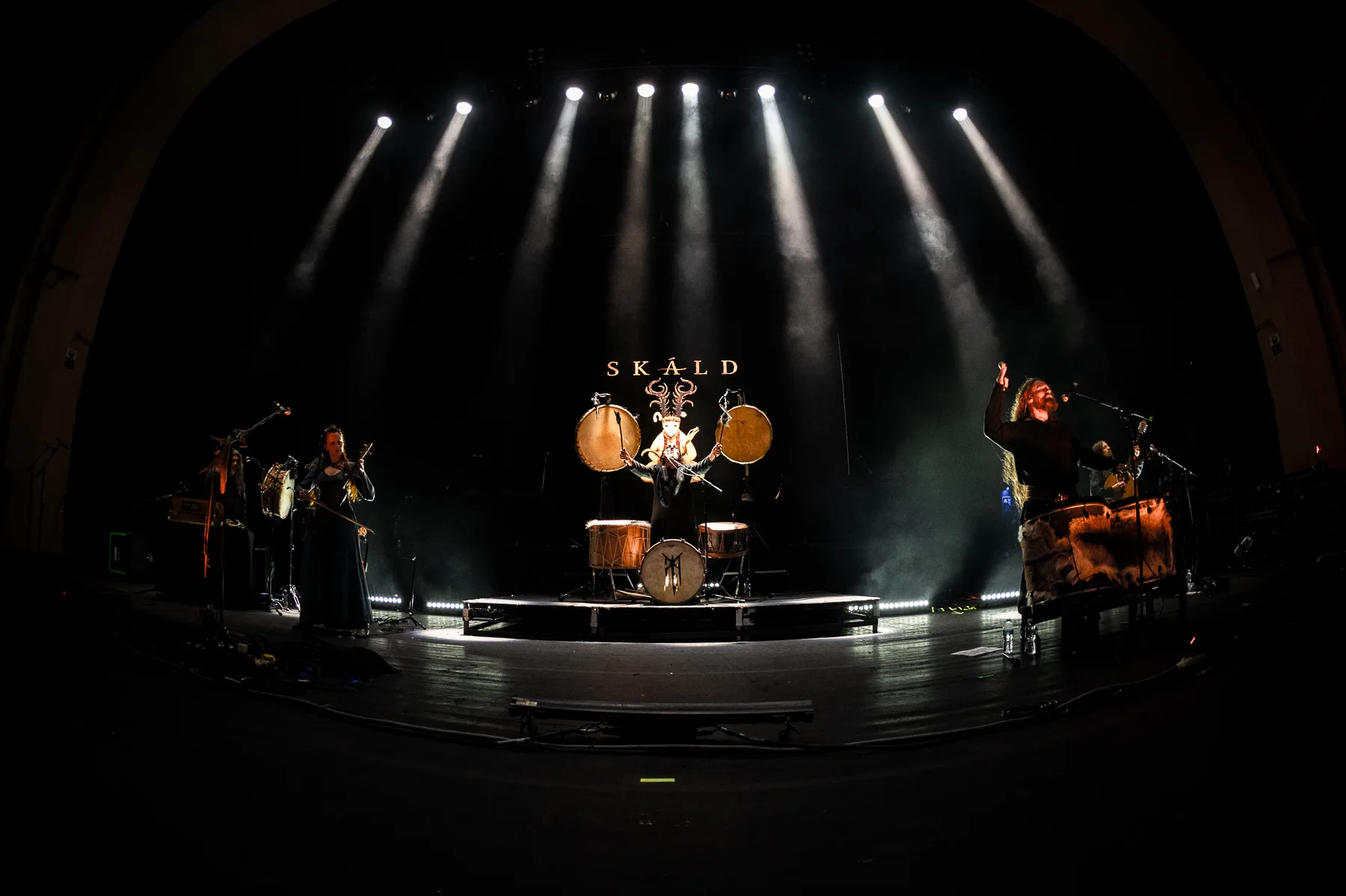
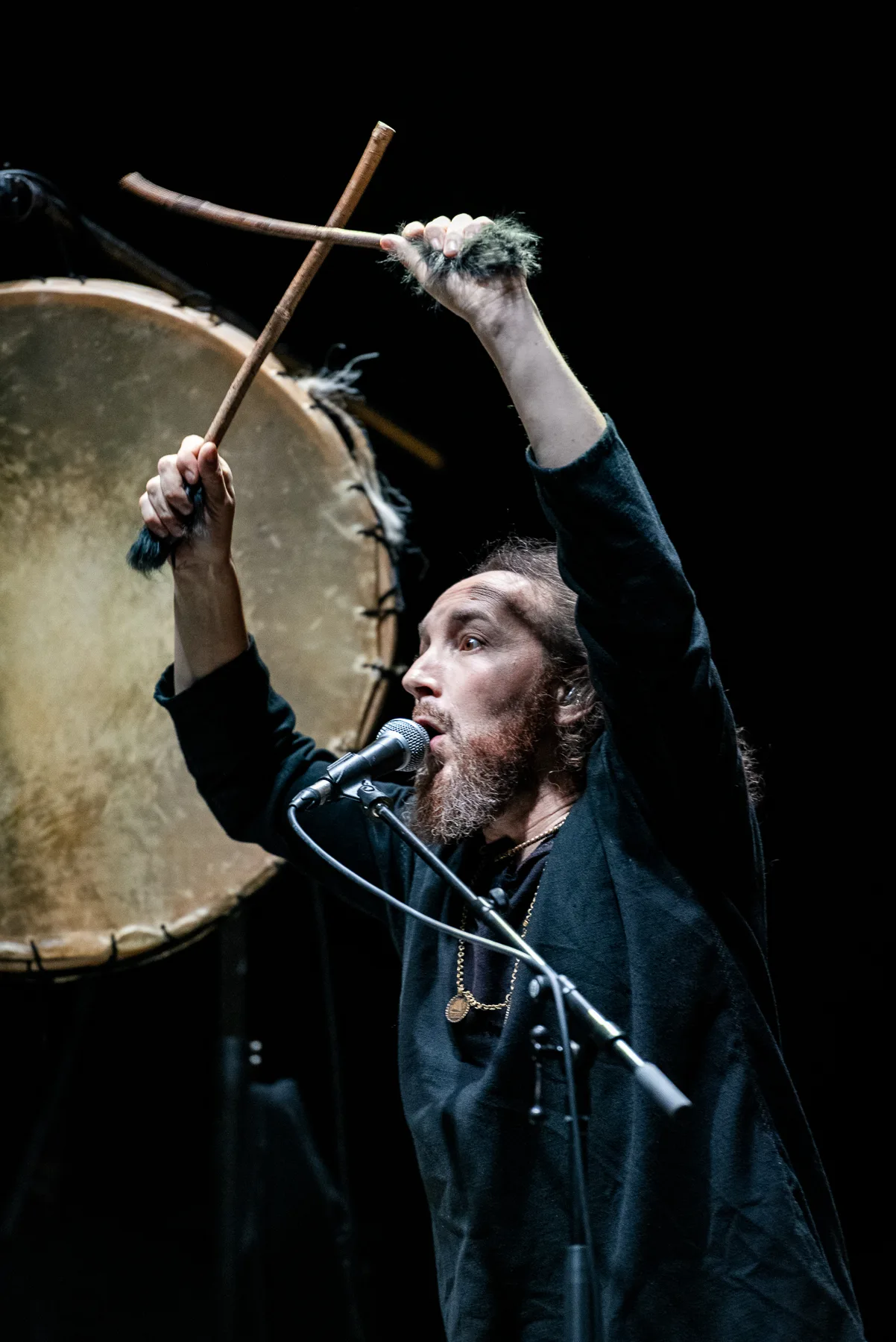
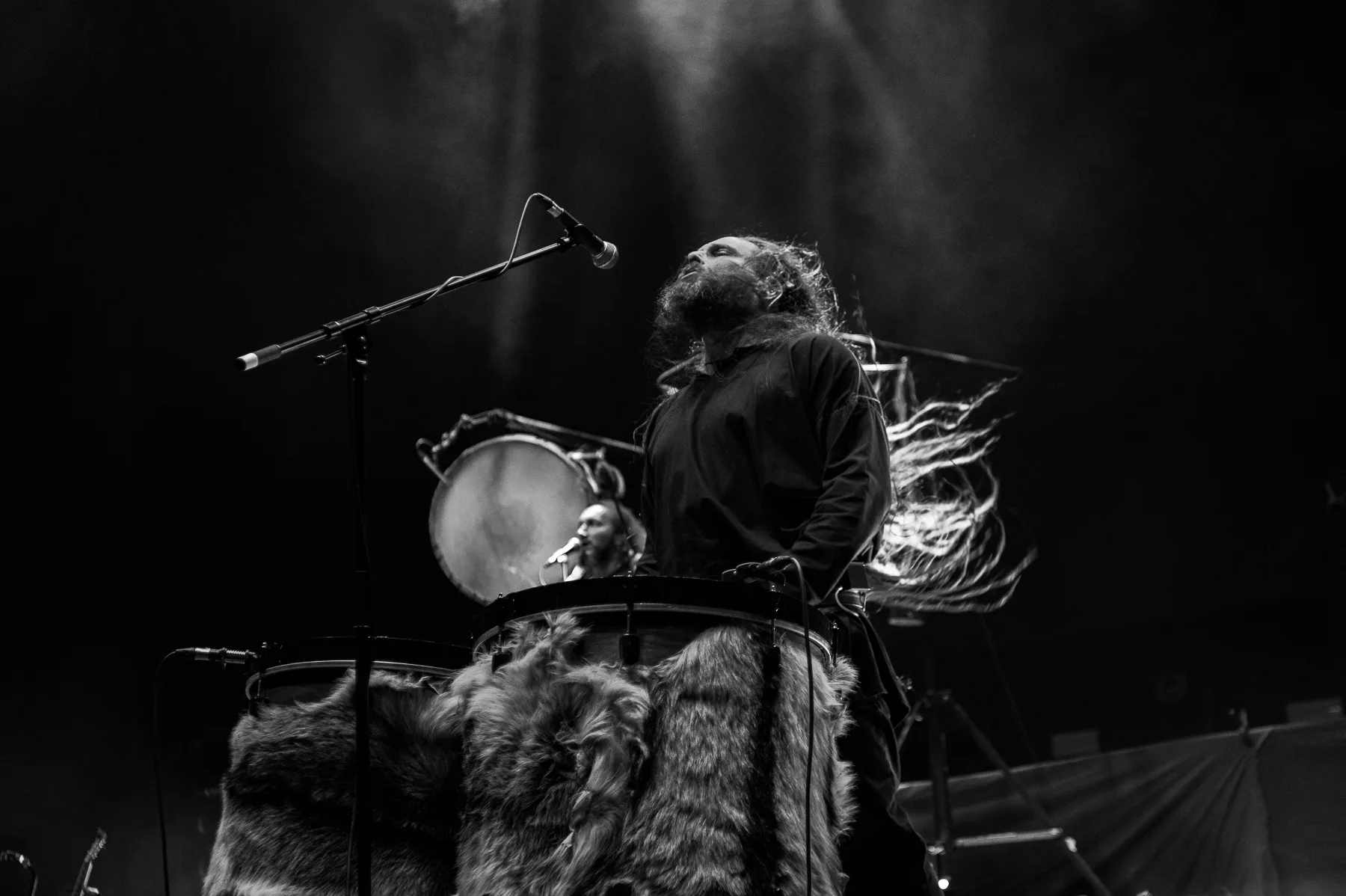
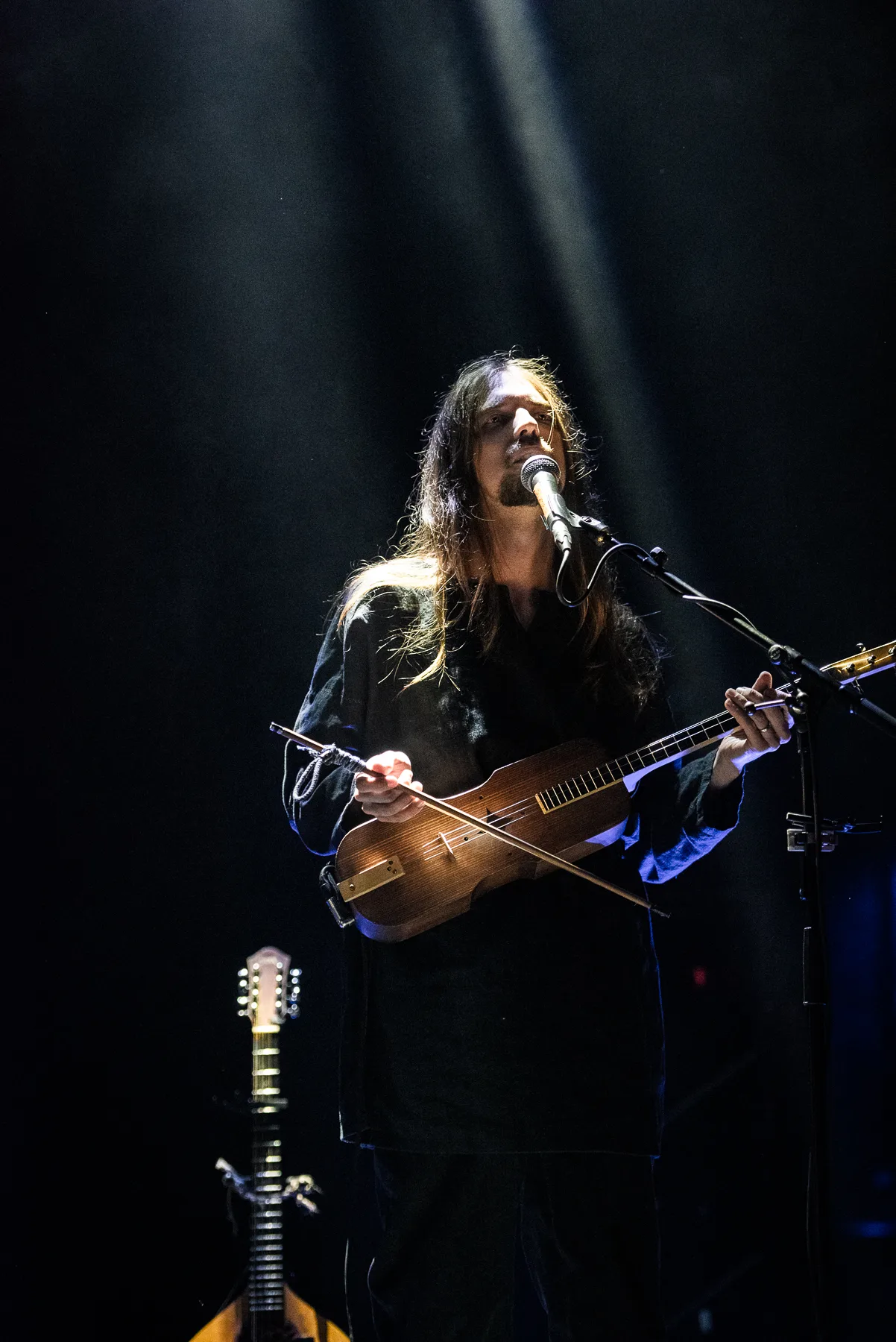
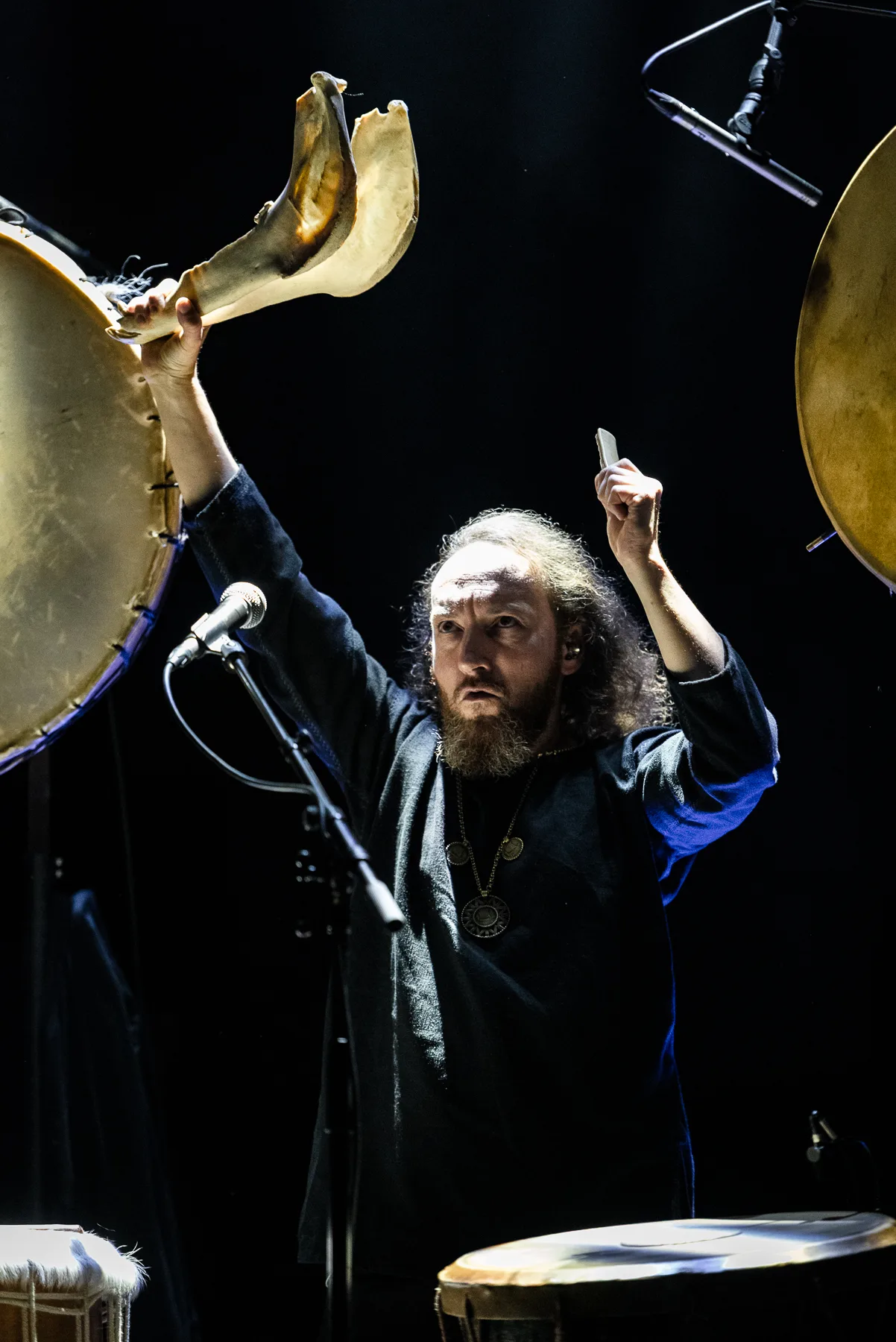
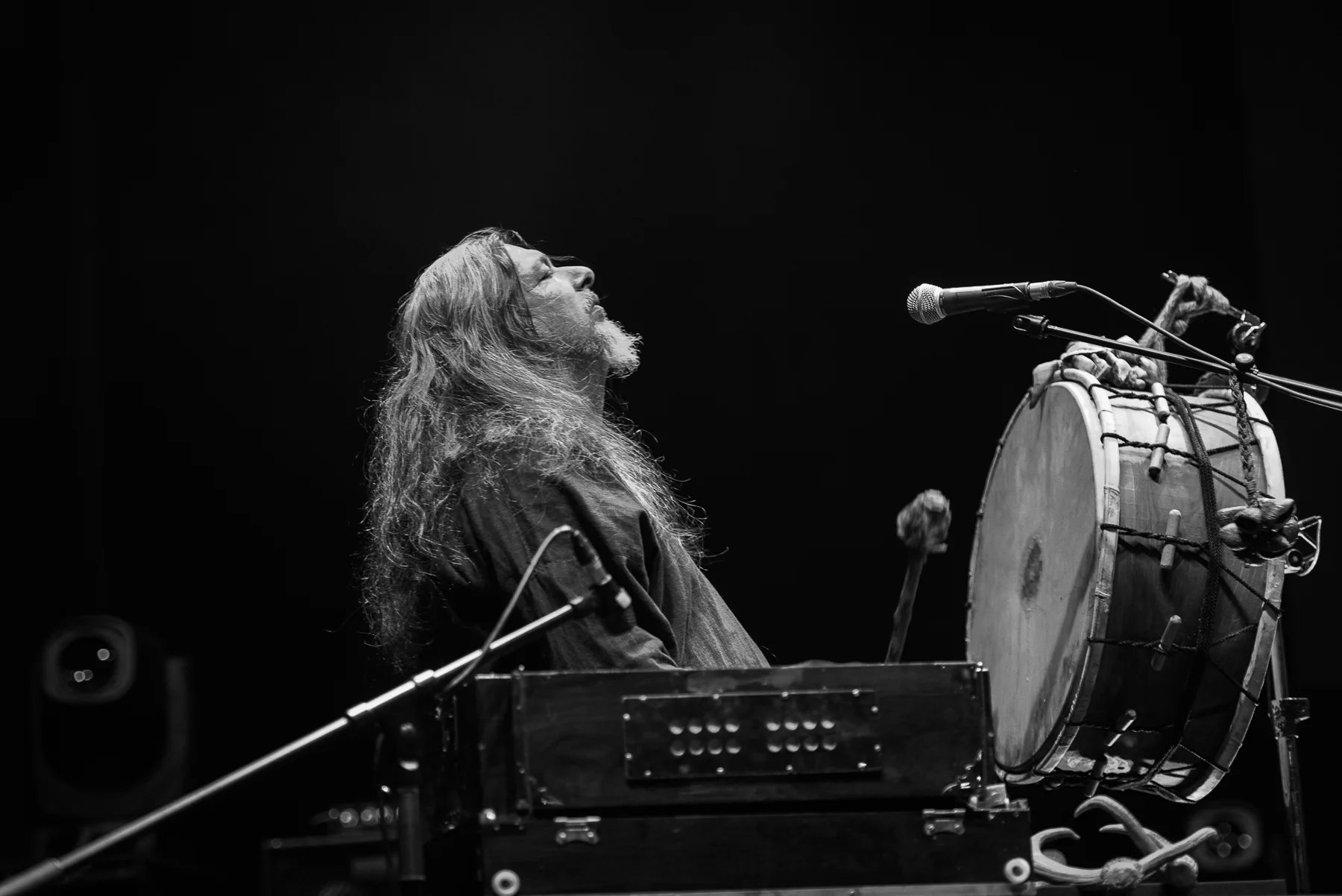
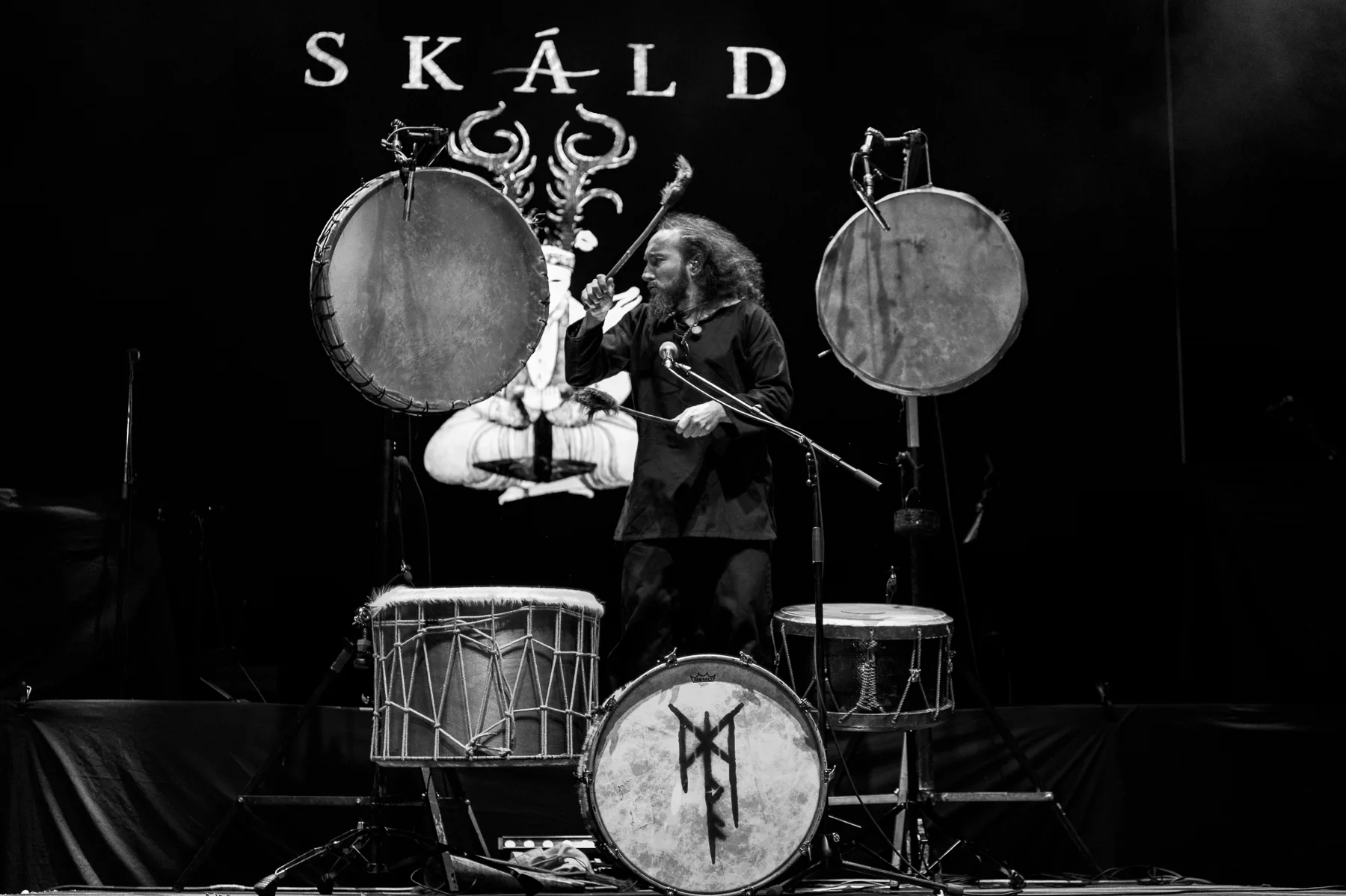
Have I ever seen so much percussion on a metal stage, outside perhaps of a Heilung ritual or a Taiko showcase? No. Was I surprised that the only melodic instrumentation was a guitar, a bouzouki, a harmonium and this handheld cello-like instrument I’ve since learned is called a vielle? A bit, given the quite literally sweeping soundscapes. Was the donkey jawbone a bit shocking? Sure, but all good art is. Was it all necessary? Oh yeah.
One swish of Steeve Petit’s hair and the drums he plays shake Brixton down to its hinges.
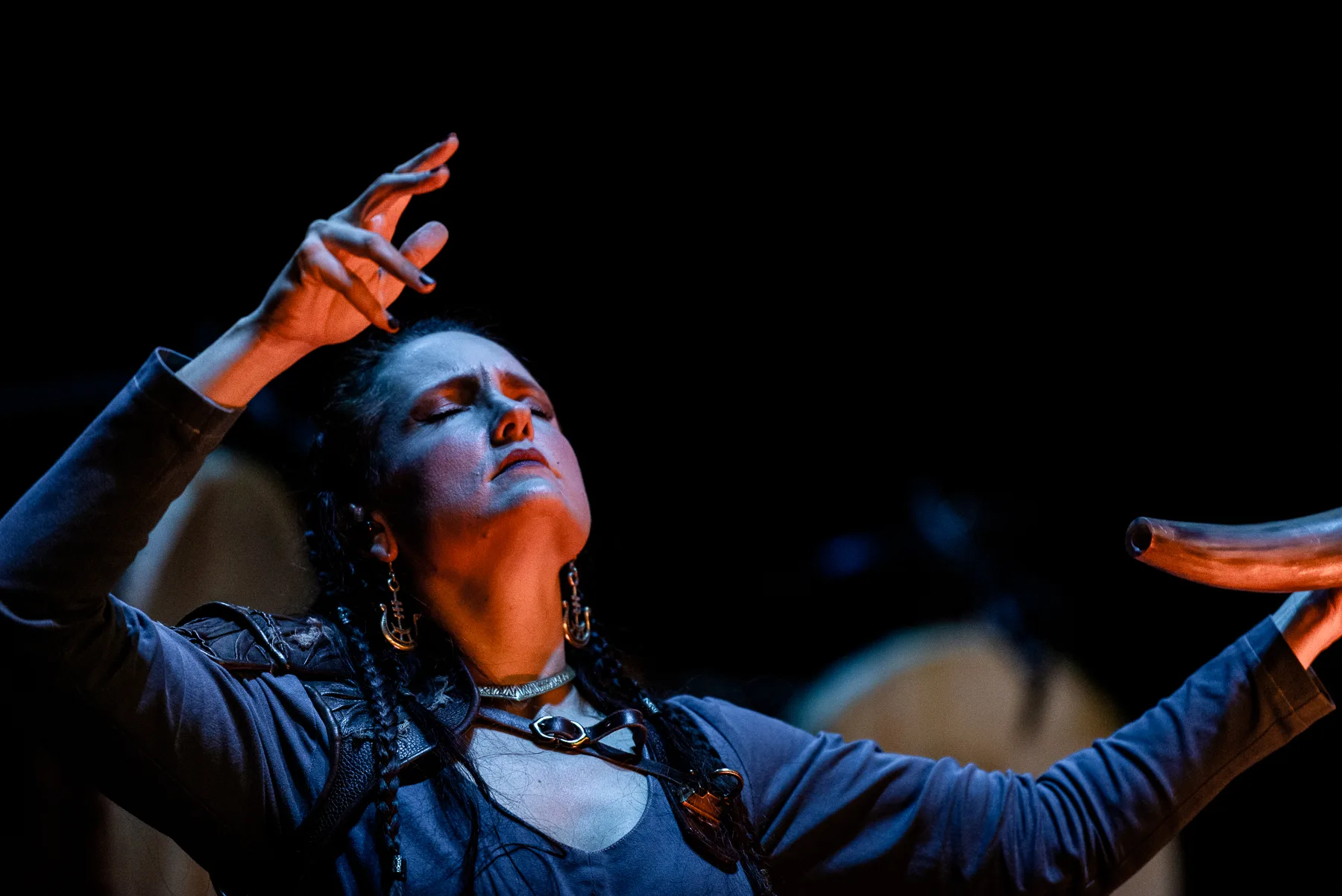
The French pagan folk band SKÁLD are five albums and a thousand years deeply rooted in Scandinavian mythology, folklore and poetic form, but they know a good look when they see it. Live, they are a menace of a good show. Marie Potosniak, her gorgeous red hair braided in what resembled Lagertha’s hairstyle from Vikings, looks like she sprang out of a tapestry, while the percussionists embody a Holy Triad of manic energy and incongruous calm.
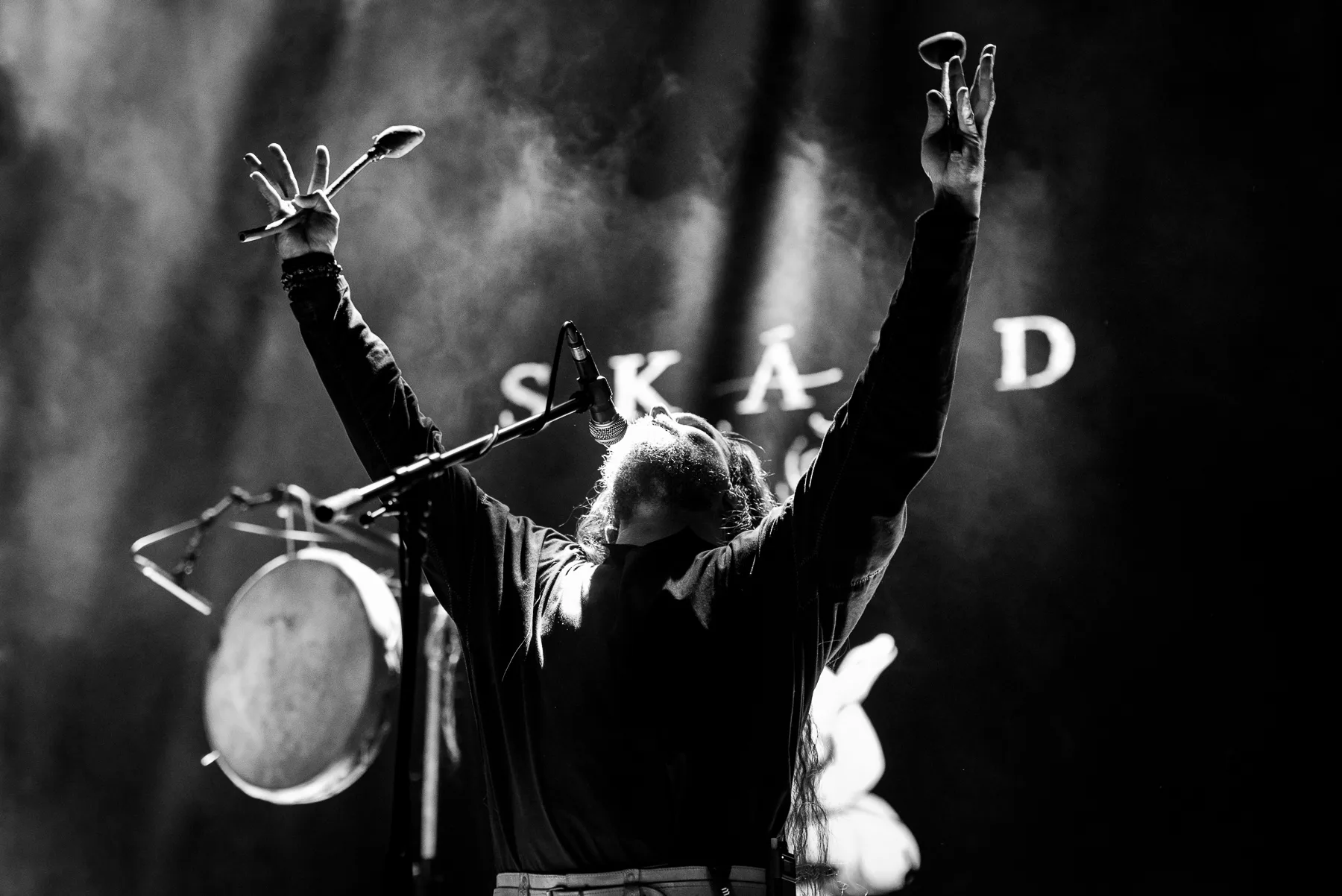
It’s a sound bigger than the quintet, each of them offering vocals and drastic facial expression changes, with a bit of help from the backing track providing the huge choral effects of their studio recordings. There’s something contagiously feral to a crowd that responds so eagerly to drum beats. You sense the thirst for that blood-rushing rhythm, the building of the frenzy like merengue being whipped into shape.
I discovered SKÁLD through an arguably less warrior route, via the cover they did together with The Longest Johns (who we also covered earlier this year, read more HERE) of the sea shanty ‘Santiano‘, but it was ‘Grotti’, based on the Poetic Edda‘s ‘Grottasöngr’, with its beautifully lilting melody and rap-like prowess, that made me stay for the long haul. When their voices turn into crone-like squeals or monstrously rough growls, it becomes so easy to imagine music like theirs echoing off an imagined Viking ship approaching with terrifying speed an unprotected English shore. Theirs is a set to appease the bard and rouse the warrior inside each of us.
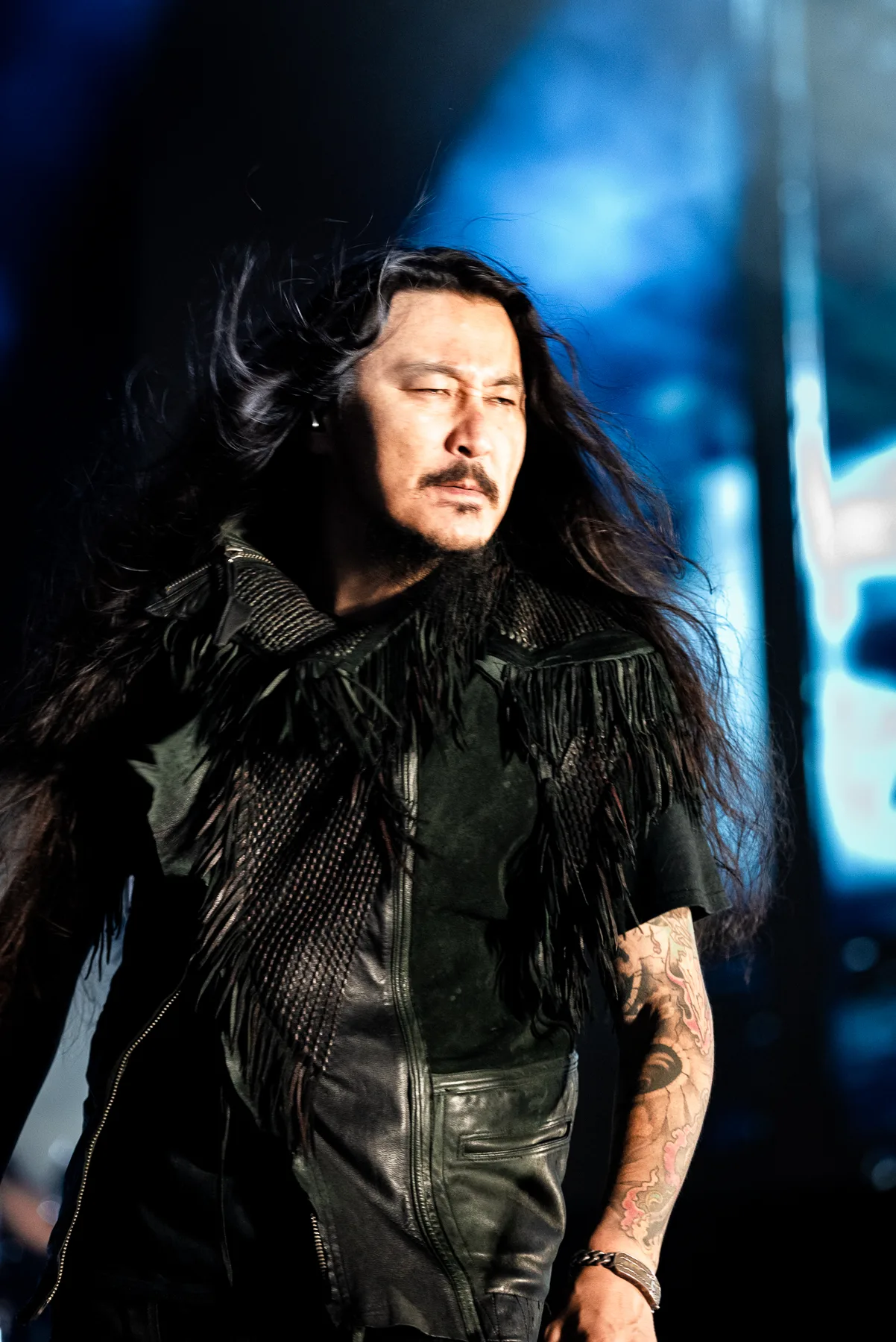
The HU
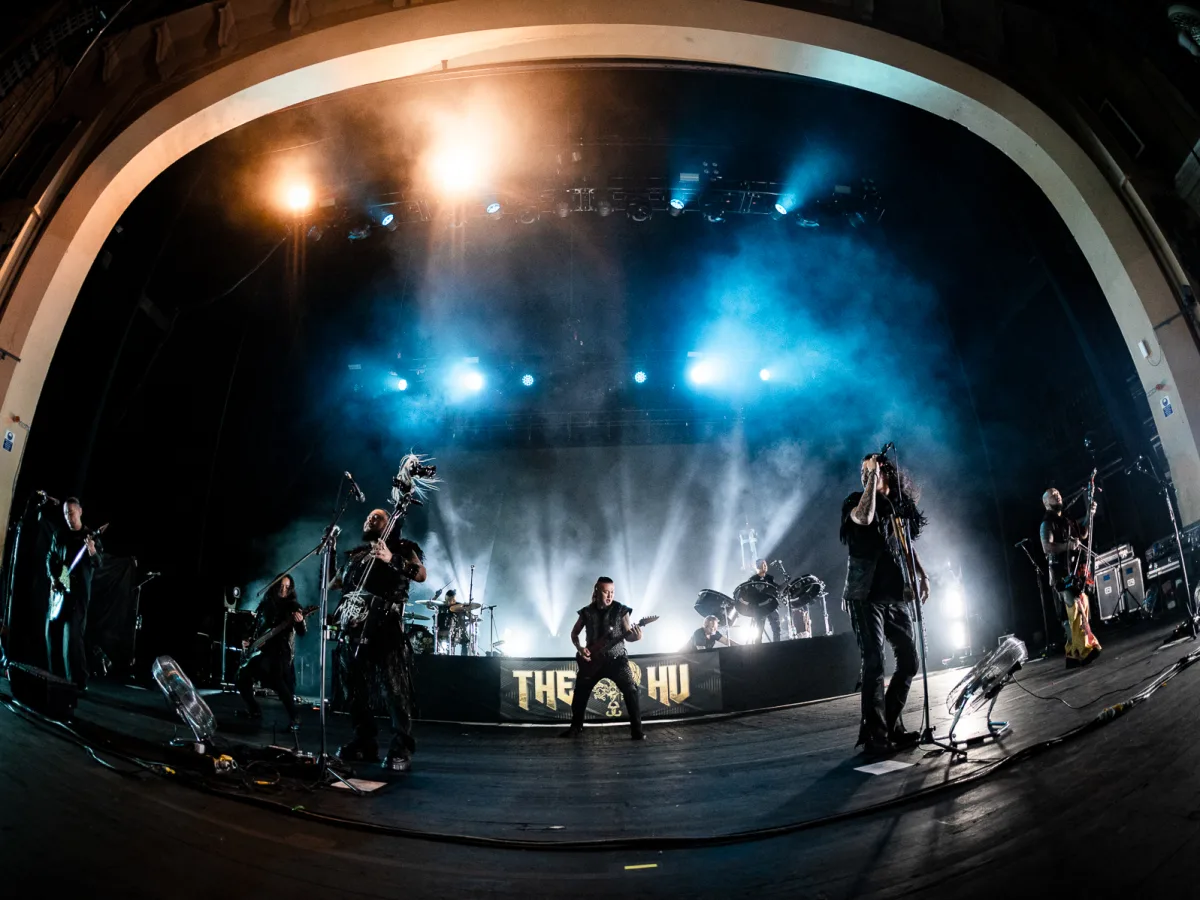
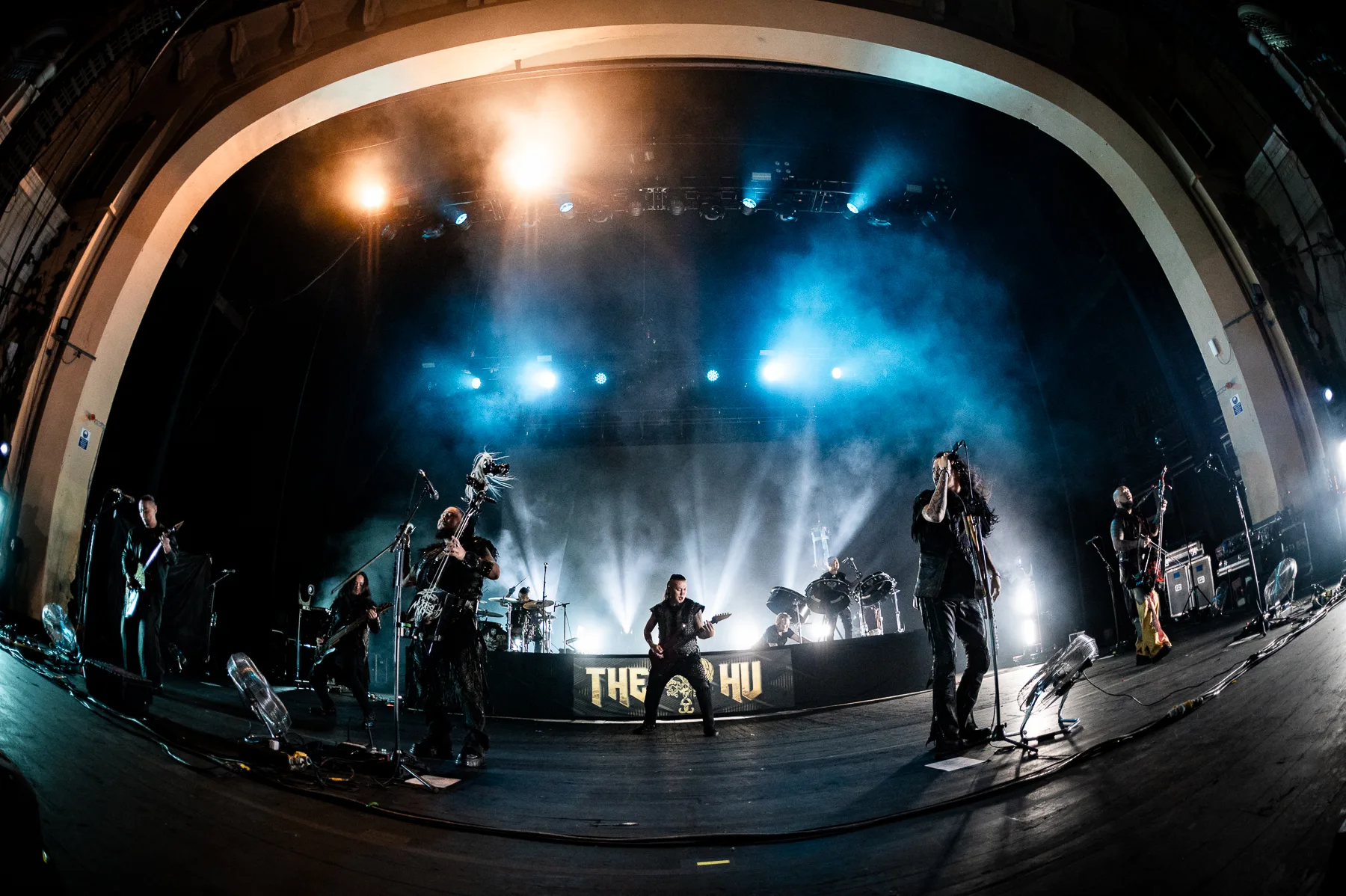
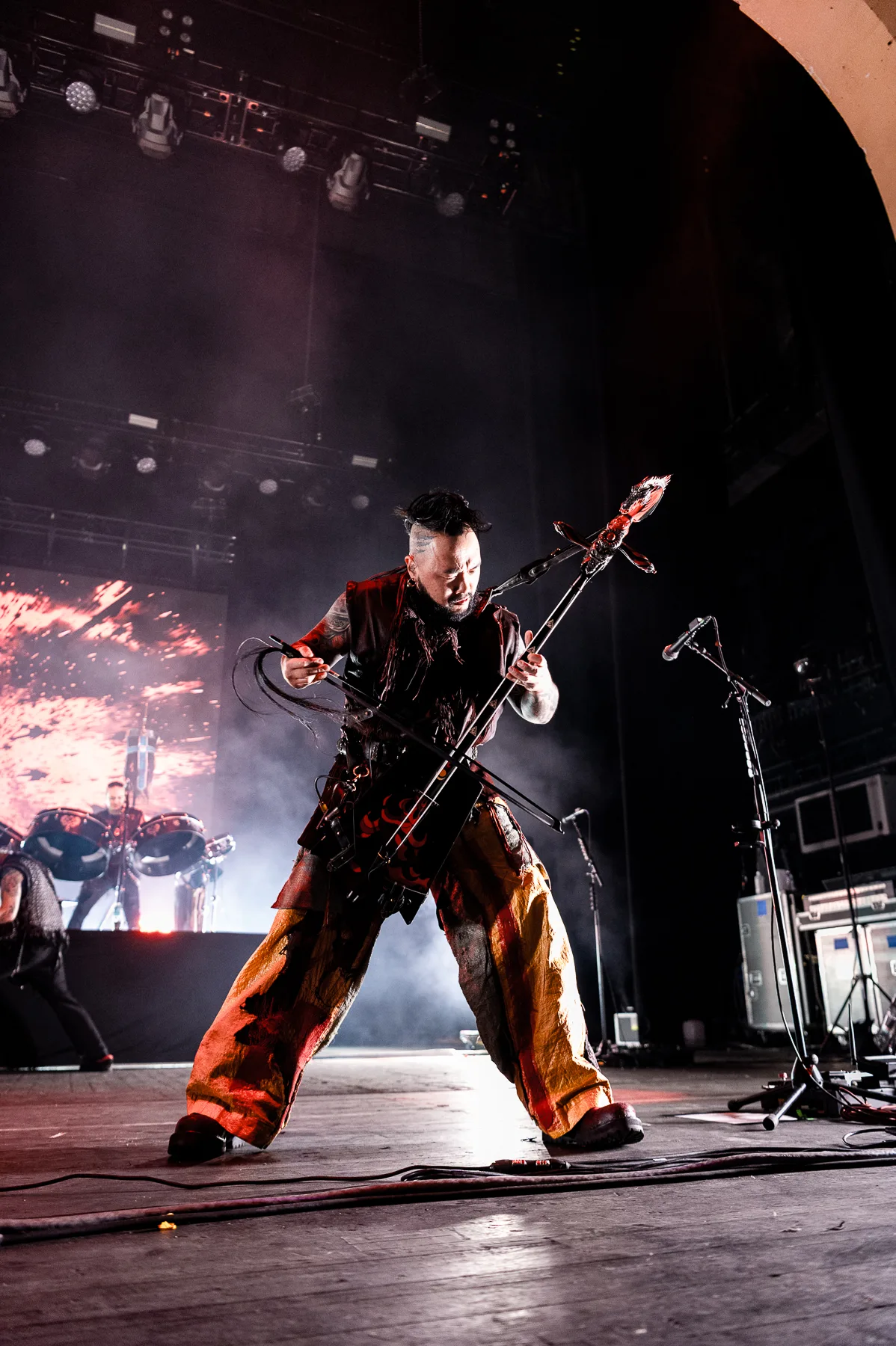
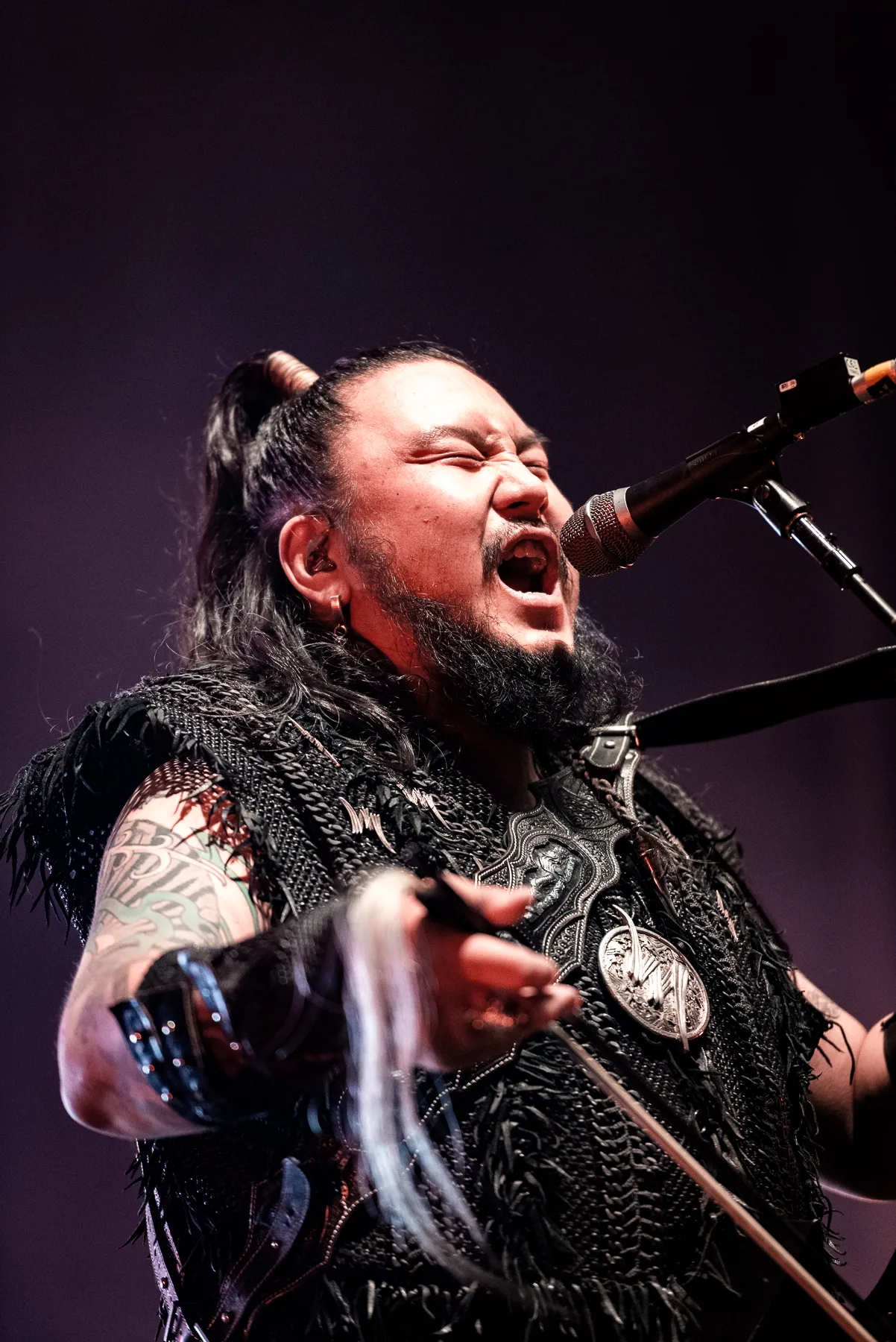
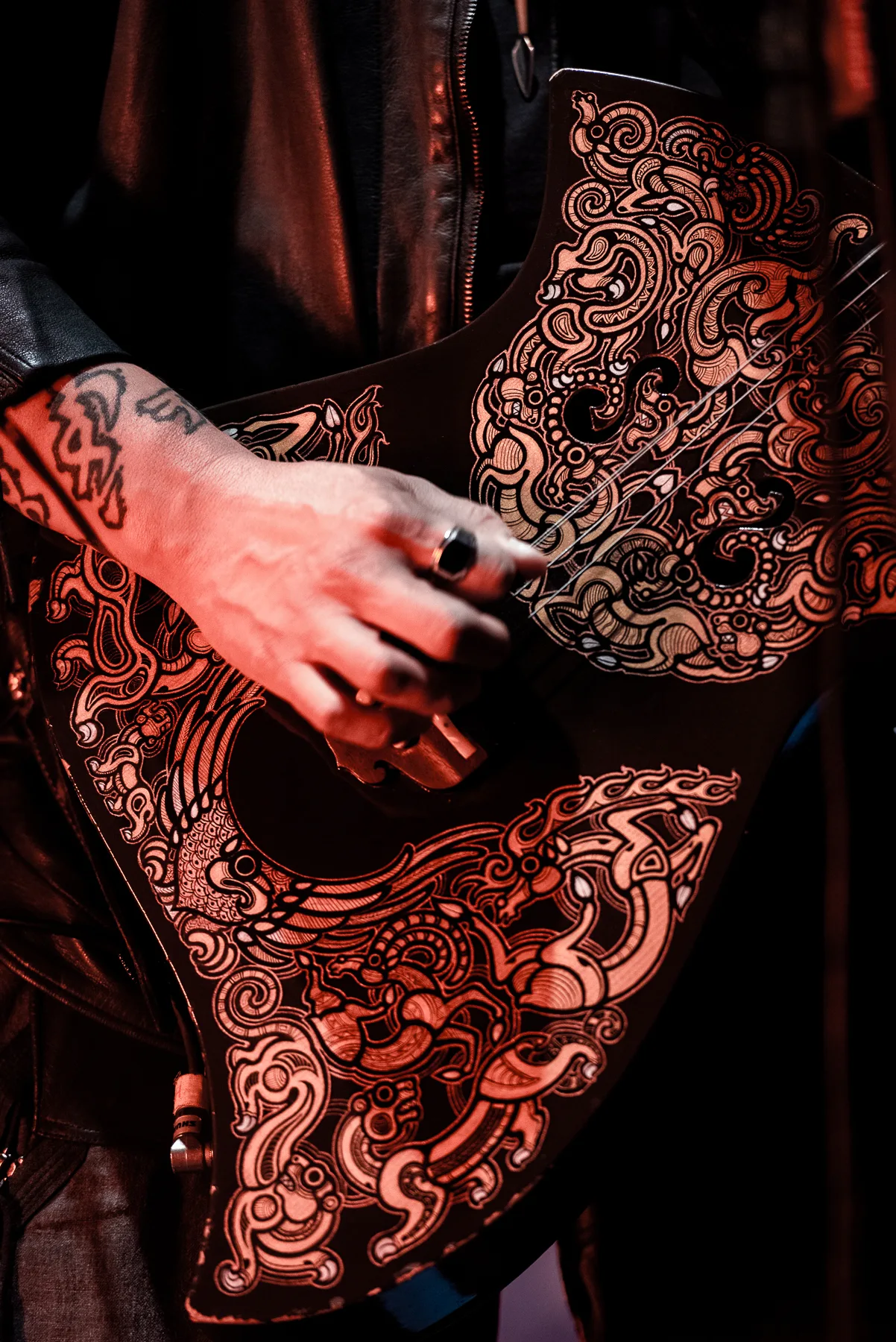
It tells a story when the main instruments on stage are not the drums (though there are two sets of them: a standard kit and an epic warlike pair), nor the guitars (though there are two razor-blade-looking ones and a bass), but a set of woodwinds, a mouth harp and two lacquered blood-red morin khuurs, horse head fiddles with white hair draped around the pegs.
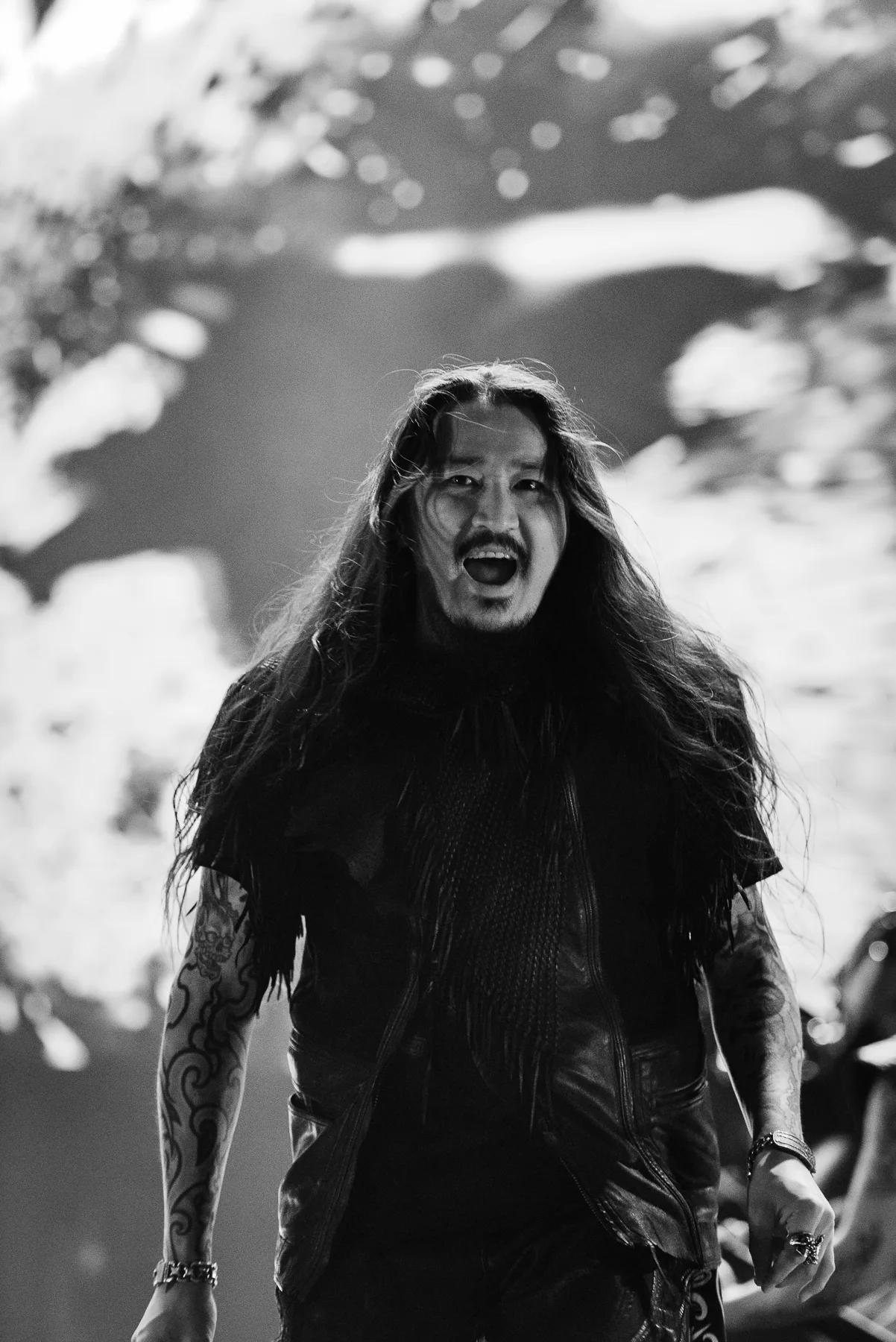
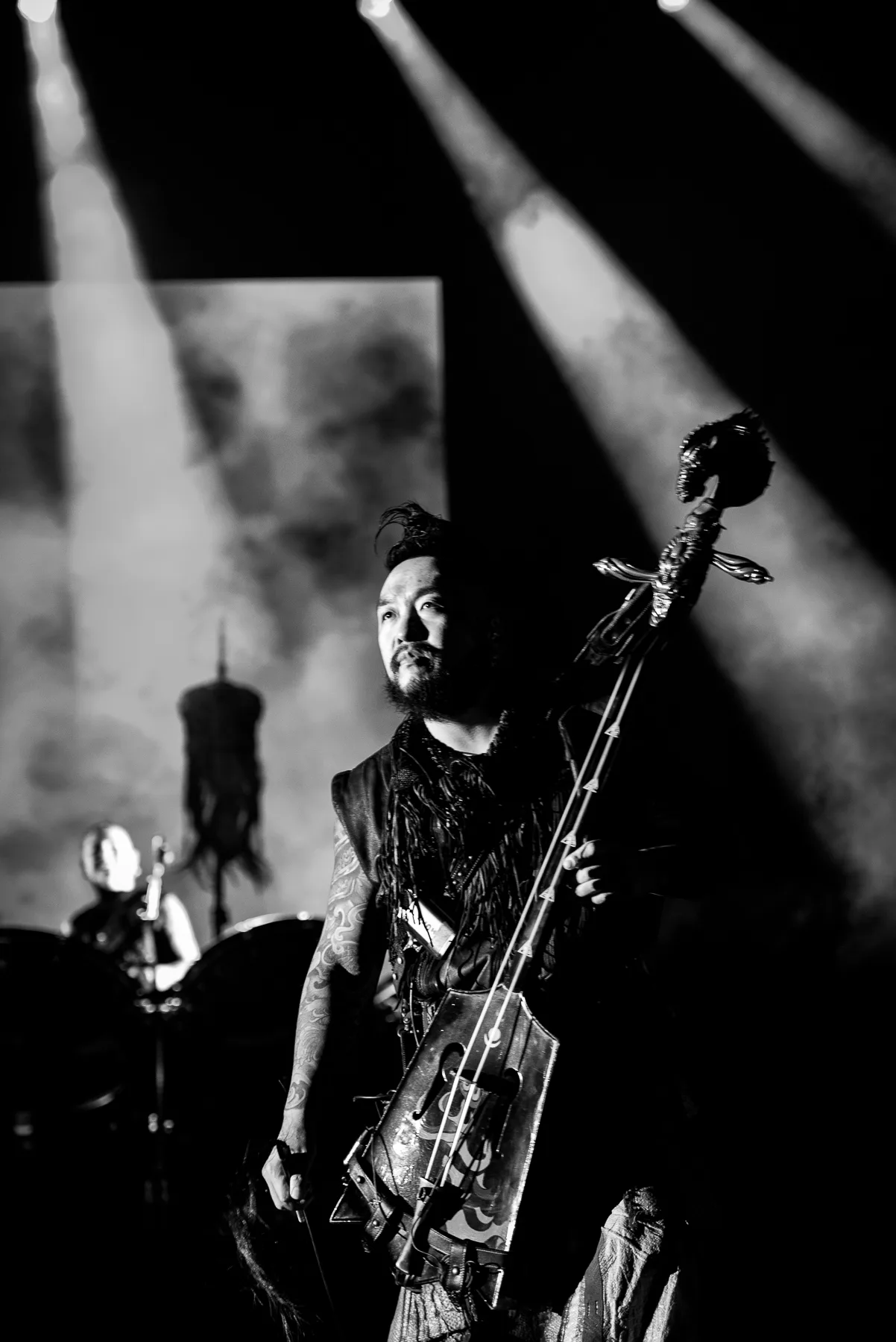
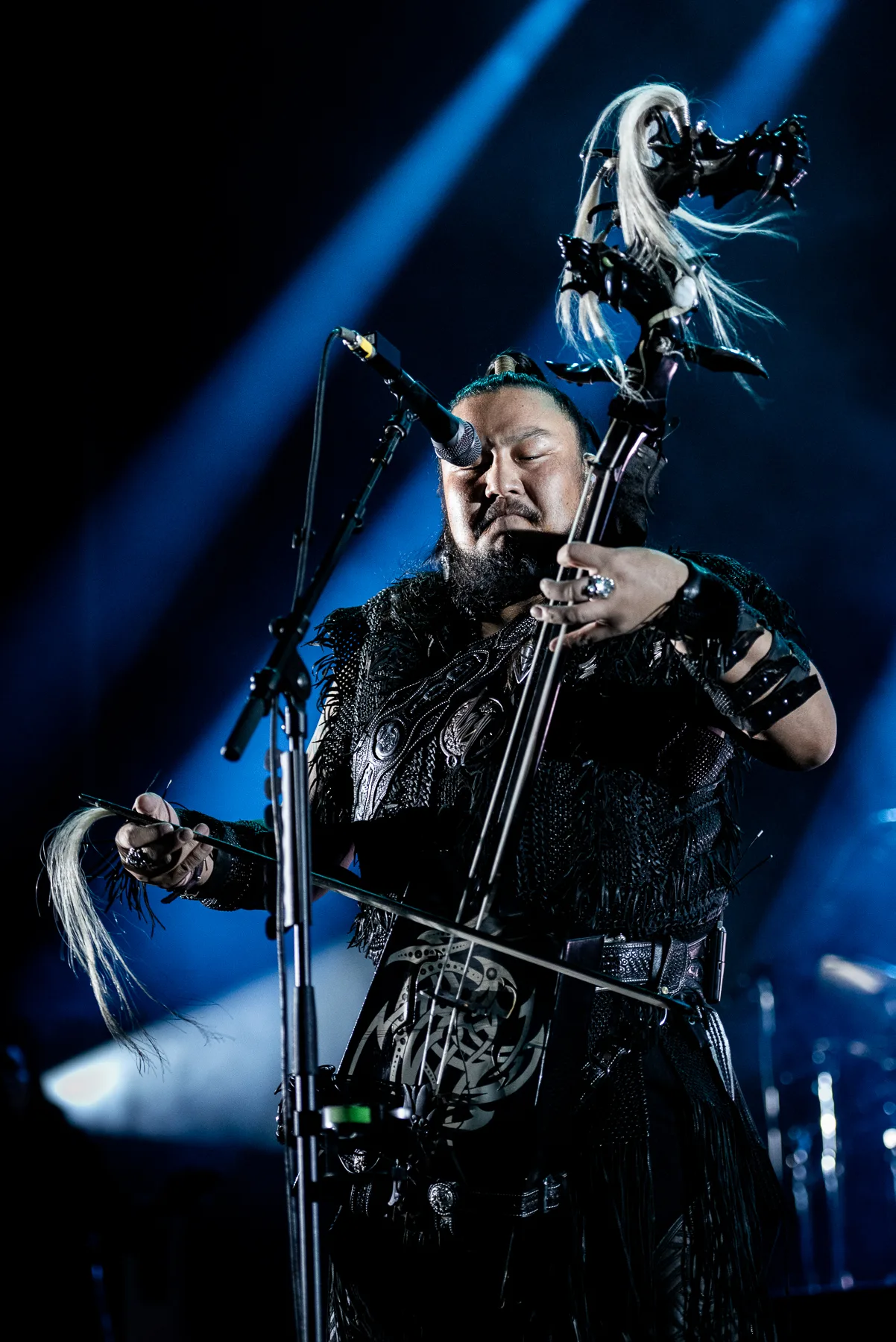
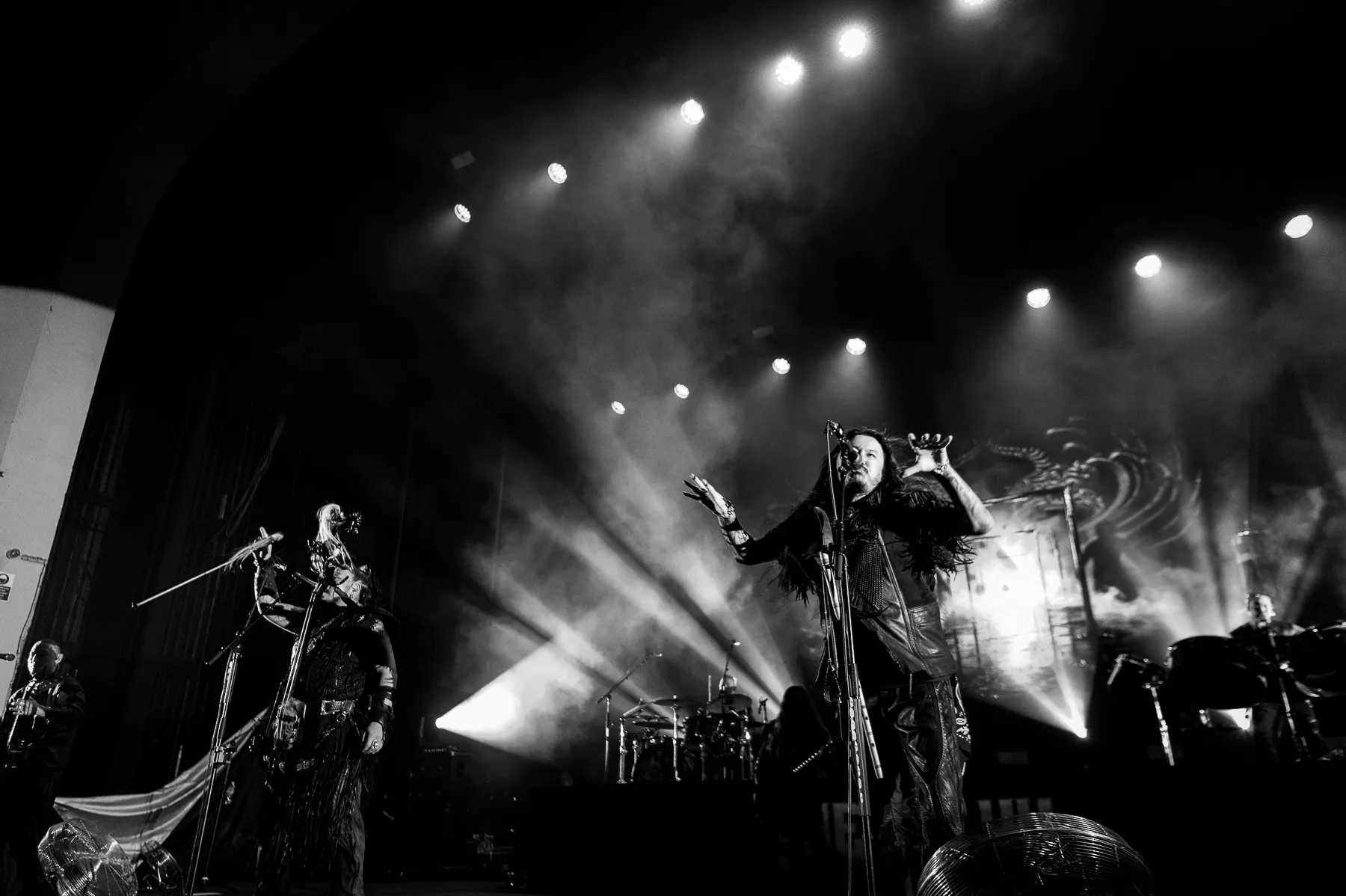
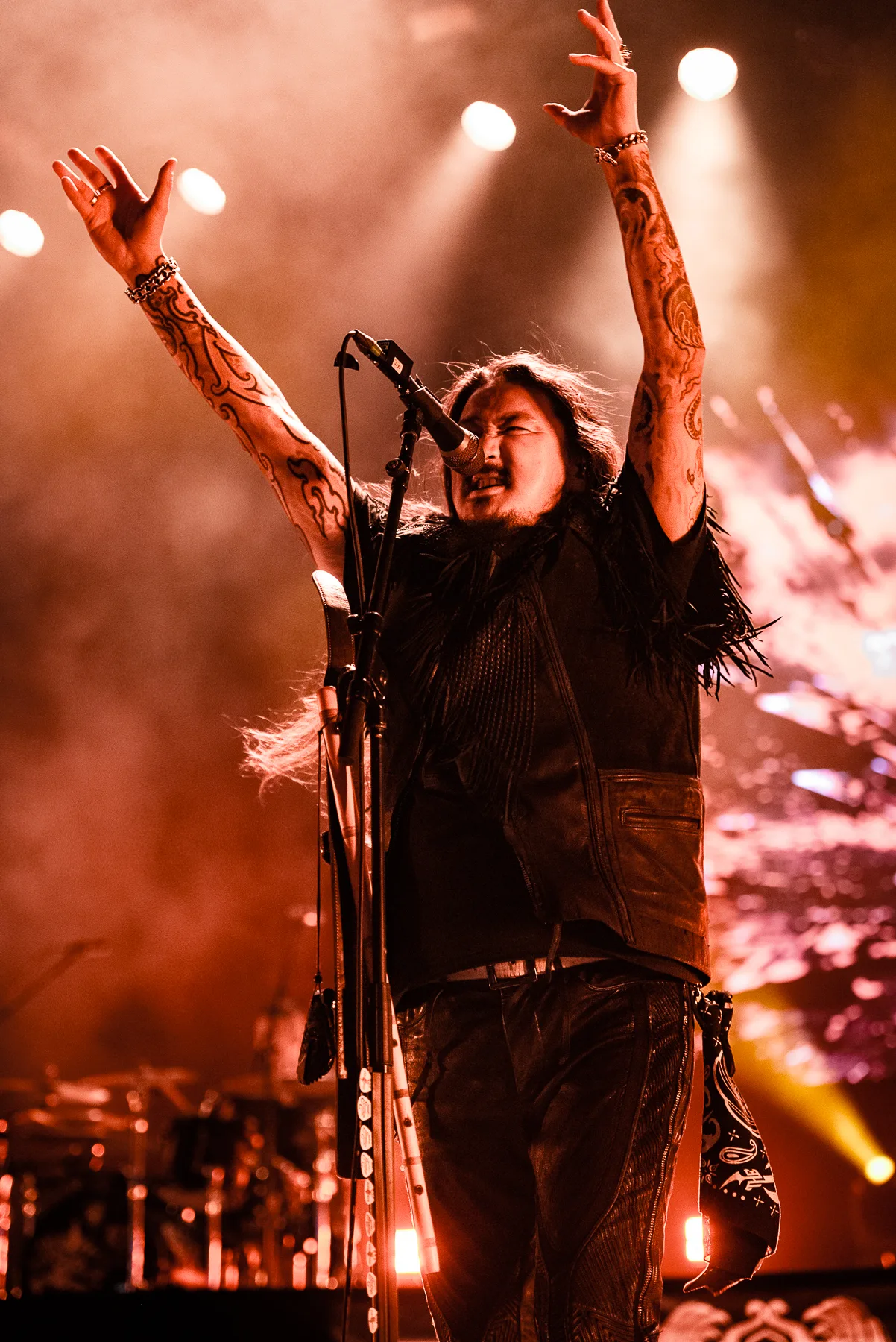
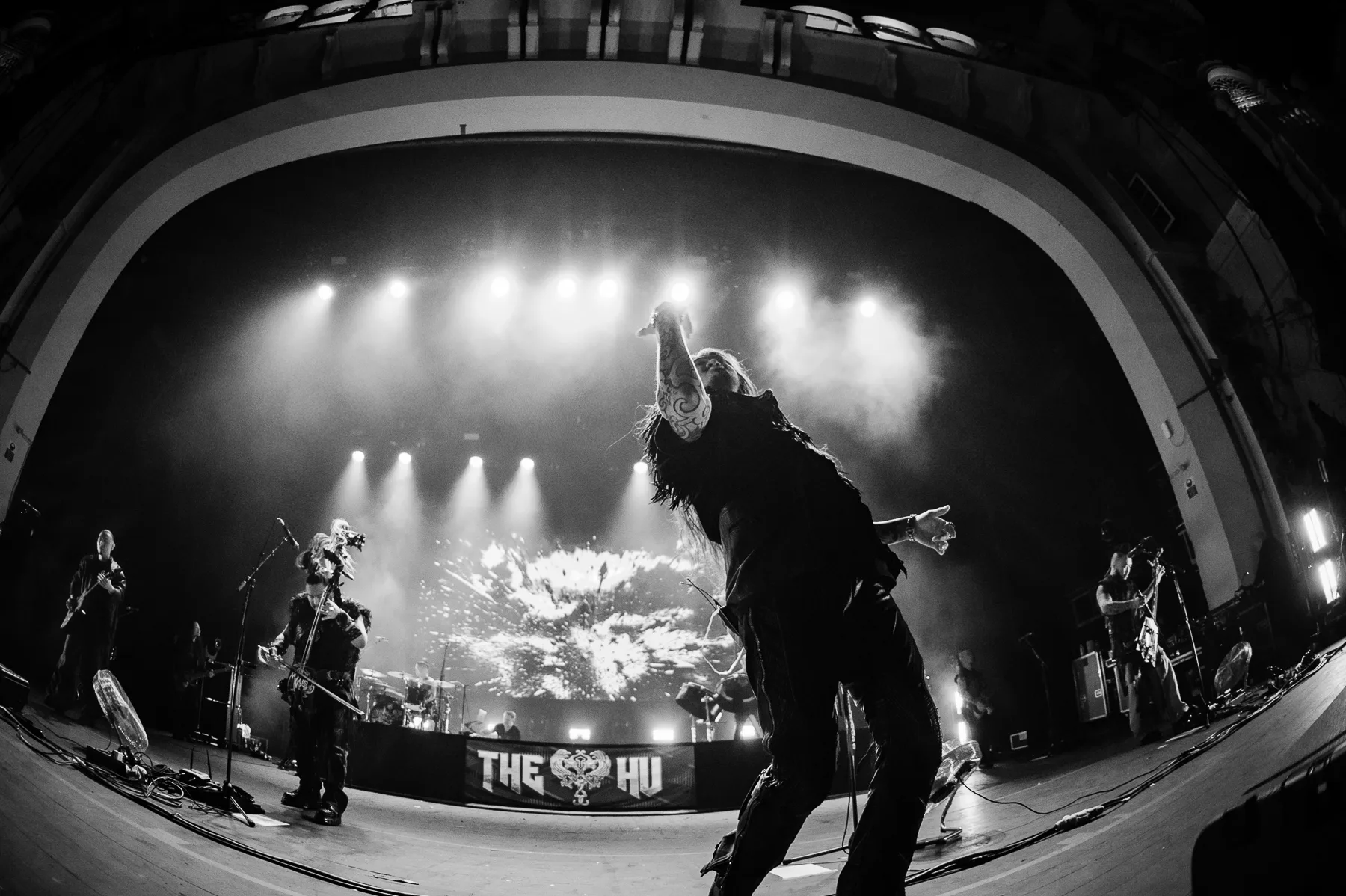
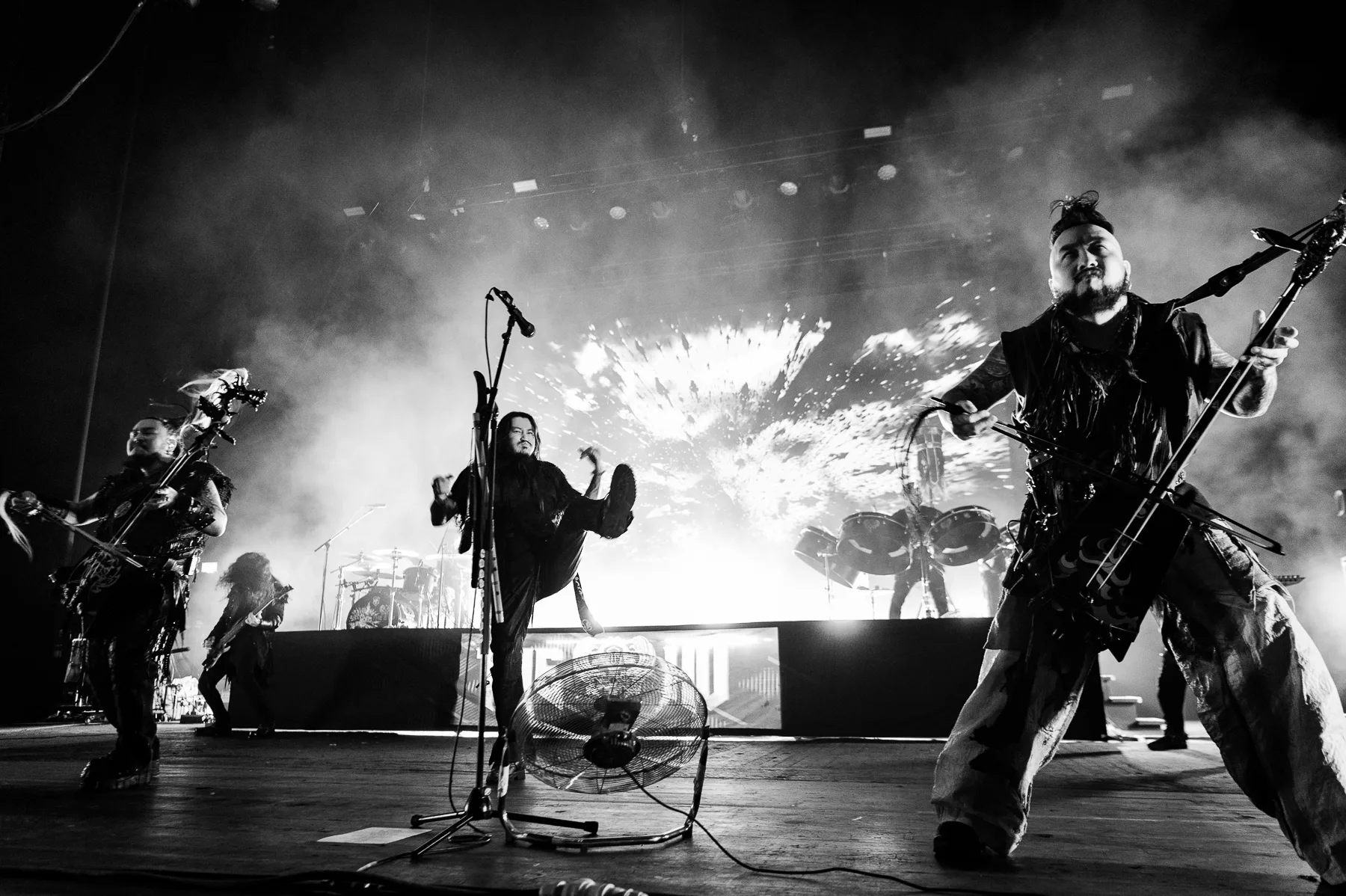
The HU was one of the bands I listened to most during the spring of 2021, when we were temporarily freed from lockdown and we could once again walk and safely-distanced mingle. At the time, partners to The HU (or competitors) were the much softer, more romantic tones of Hozier, Tamino, Glass Animals, them of the music to make you feel in love and alive amidst your fellow humans. But I gravitated to the Mongolians as the days grew longer and the return to normality and live music and crashing against your fellow man came ever closer. Their 2019 debut album The Gereg is an album promising it all: the adventure, the rush, the steady ground of a few millennia of history.
Now hearing them in the flesh, on tour promoting their third studio album HUN, I see that promise fulfilled, in the dozen crowd surfers rising to the surface during the soft ballad ‘Echoes of my Father’ and a roomful of smiles and fist pumps to ‘Wolf Totem’. Once upon a time, we were as spread out as if on the Mongolian steppe and now the moshpit whirled like it had never stopped. The HU themselves launched their experimental metal blend in a country that for a long while had banned metal and found international success almost overnight.
There are a few firsts for me. Obviously the horse head fiddles. The giant inflatable Mongol warrior setup for the encore really drove the point home that, while they played an Iron Maiden’s ‘The Trooper’, this was very much their turf. The kid who decided the third song of the set was when he wanted to get kicked out of the venue, for jumping on stage to dance (admittedly, pretty alright). I’ve not seen someone body-slammed like that outside of a movie, so let this be a PSA: the stage is someone’s workplace. You don’t barge in. Save it for hardcore shows.
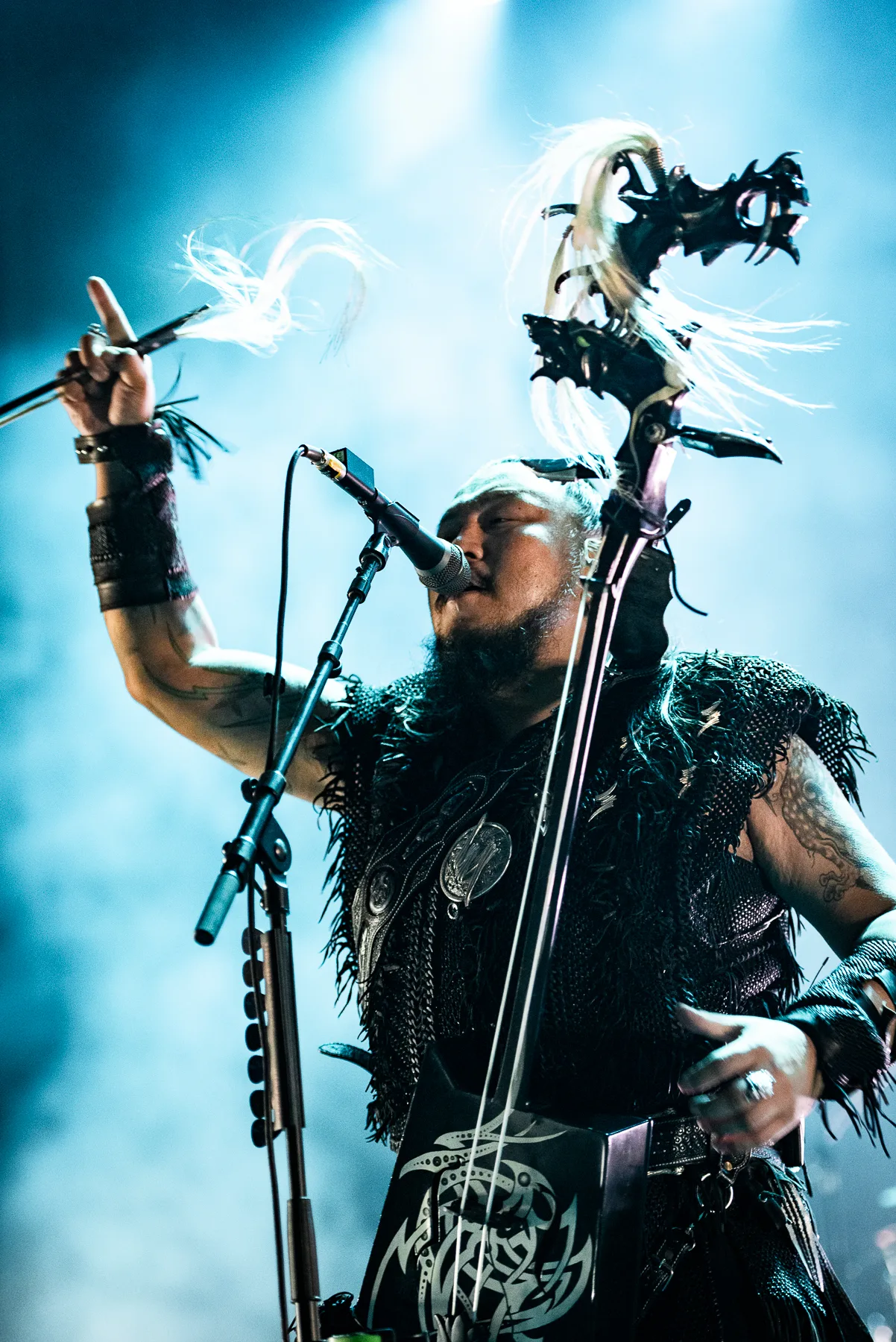
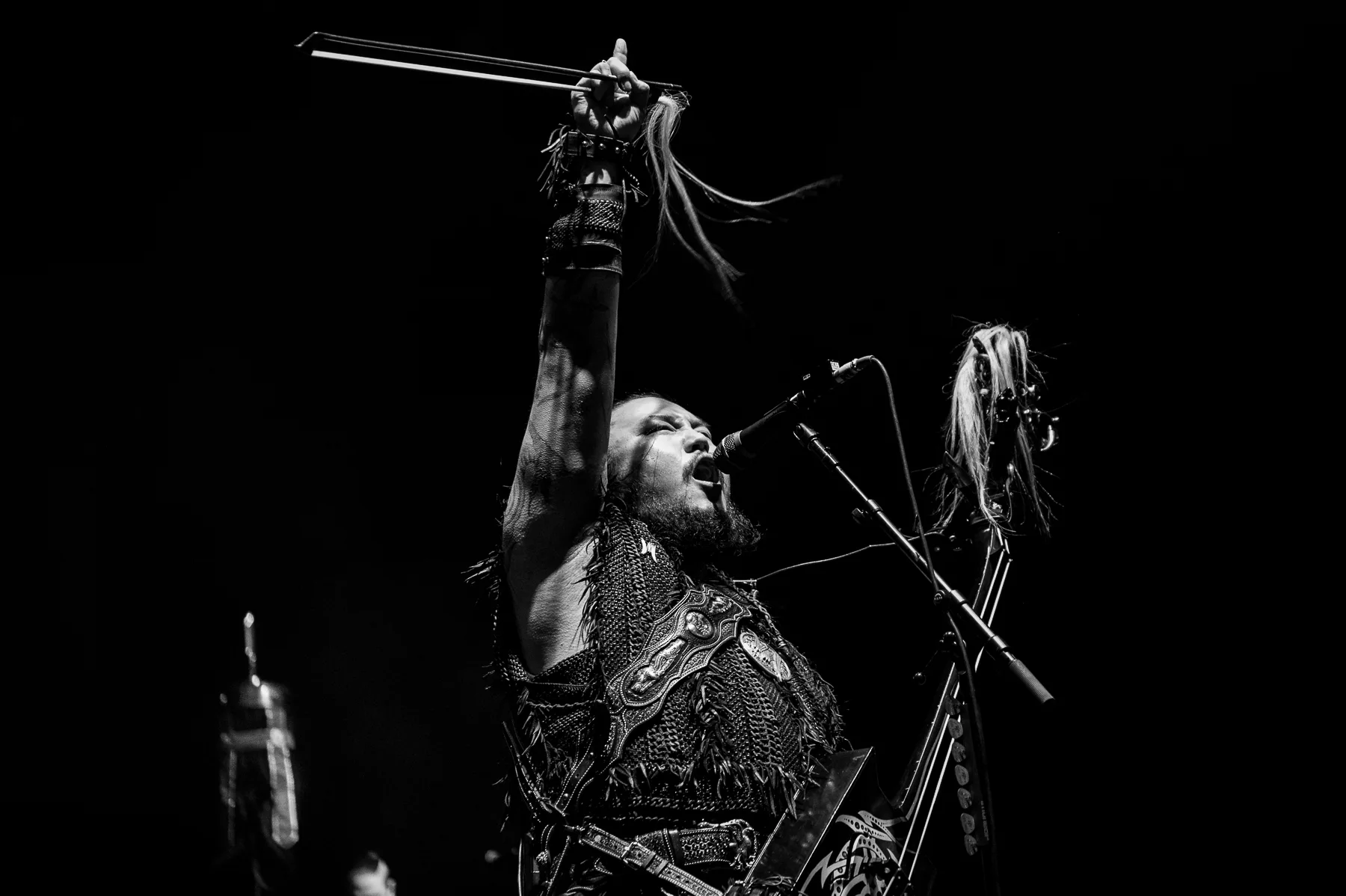
The Nordic music space owes Mongolian throat signing half their combined GDP. The otherworldly, sometimes devilish, often shamanic sound of it, has become ubiquitous to the point of becoming confused with actual traditional Nordic folk music. Now, the bands employing it know it’s more of a theatrical ambiance-setting trance-inducing component than a historical one, and at this point in time it just kinda comes with the territory. It’s expected.
But coming from The HU, the showmanship of it is grounded by its lineage. The Golden Horde may not have anticipated the electric guitars, but the artistry of the band remains intact whether there’s distortion or nothing but their virtuosic fiddle-playing. ‘Yuve Yuve Yu’ went viral in 2018, thanks in no small part to a very catchy chorus and a cowboy swagger only an ocean removed from the Wild West, but also because The HU sound (and look) like they just stepped out of warrior legend. The combination is intoxicating to behold. And it is this combined commitment to their roots and sonic uniqueness that attracts.
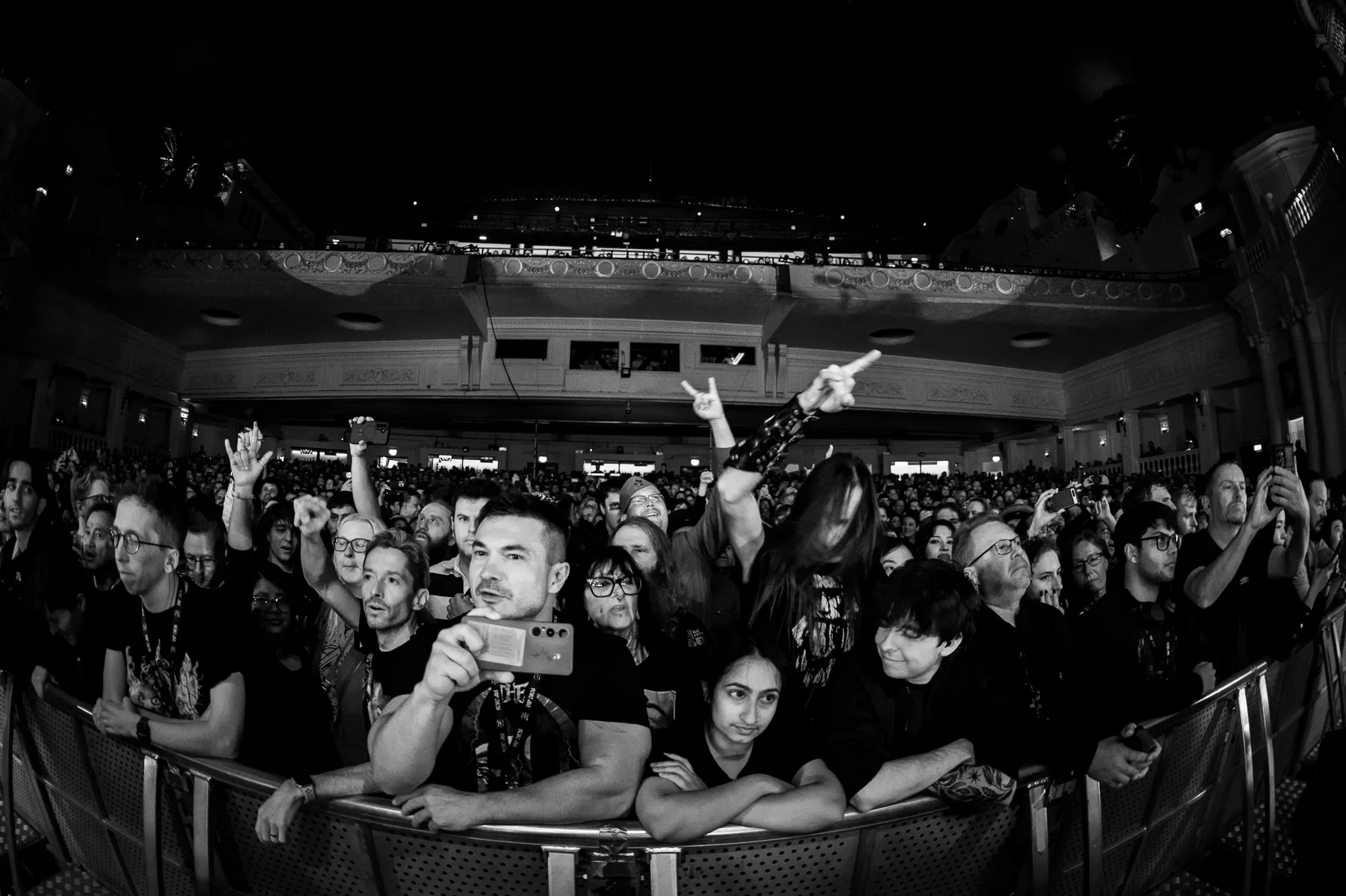
Here was one of the most diverse crowds I’ve seen at a metal show yet. It’s metal sung in a foreign language, with foreign instruments, and people show up. We want this, this nicheness, this oneness that then permeates the rest of our lives and maybe gets us more comfortable with the fact that many kinds of truth can be true at the same time.
Again I think back to the kids in the queue and wonder whether this will be the gateway show into a lifetime of heavy metal. Whether this will teach them the language of the words isn’t a barrier but an invitation to pay closer attention to the energy. Whether this is the show their parents will use to get them into playing traditional instruments, arguing that if they find classical music too slow and boring, they can always rock out with their awesome headbanging big brothers in The HU.
Waiting for Setlist.fm updated setlist