



Back then (circa 2004)
Let’s go back in time for a moment to give you some of my personal context and a sense of how I’ve firsthand seen the scene’s evolution, and why this is a necessary and meaningful article for me to write.
As a woman who’s grown up within the Irish/UK rock and metal scene since the early 2000s, I have huge respect and admiration for all women across the music industry, from artists and musicians to ‘behind-the-scenes’ producers, tour managers, photographers, etc. (honestly, the list is endless, as is our dedication and input.) I feel it’s imperative to acknowledge but not overcomplicate women’s presence within the scene, to highlight the lack thereof in areas and also to note how, at times, we are not treated equally alongside our male counterparts.
I remember going to hardcore gigs as a teenager and the privilege of the event being the short queues to the women’s bathroom at a show (because there were so few of us in attendance!) However, there was always an underlying feeling that we didn’t belong or fit in within the space. We were consistently being told to get out of the pit for our own ‘safety’, never fully feeling immersed in the concert experience the same way as our male peers. We were then, ironically, labelled as ‘posers’ and asked to prove our dedication to the band in numerous ways, including the unimaginatively overused question of “Can you name three songs by this band?”
I remember vividly myself and another friend, wearing the baggiest jeans we could find, pulling up our hoods on our band merch and placing bandanas on the lower halves of our faces once inside the venue, in an attempt to disguise ourselves and our genders, just so we could “actually” mosh, have fun and not have men try to ‘put us in our place’ or ‘heroically move us to safety’.
It also quickly dawned on me, with Death metal, Metalcore and Hardcore being my ‘Rock of choice’ subgenres at the time, that the majority of bands and musicians I looked up to had no women in their production.
I come from a musical family and was thankfully always encouraged to create and express myself in whatever way felt right to me. I was trained in classical singing from an early age, but I always longed to be in a metal band. When I expressed to my teachers in school my lifelong dream: that I was moving to America to go to “growling” classes (some course I found through ‘friends’ on MySpace, probably), they looked horrified and made me do additional career guidance sessions.
I was shown from a very early age that this “wasn’t for me” compared to my male counterparts. “Rock Star” at the time was the only future I really saw for myself, within a scene where I didn’t quite fit in; this was lonely and isolating, and I always felt like the loser kid who would never quite make it, wasn’t supported or encouraged to try, largely because of my gender.
But I kept trying (and growling) for a while, despite being told “you’ll wreck your vocal chords”, “only men have low enough voices to do that”, that I was “scary” and how it’s not “ladylike” and that I should check out some (insert generic pop female artist’s name here). All while having the nuns in my Catholic all-girls school, thinking I was possessed, which I’m sure some of the students did also.
A while later; a friend introduced me to “The Distillers”, and hearing Brody Dalle sing in her uniquely raw voice and play the guitar so gutturally was life-changing. Then I found Christina Scabbia, Hayley Williams, and Amy Lee. They were women who weren’t just existing in this space, but thriving and making bold, influential and inspirational moves within the industry.
But the outsider negative criticism was loud and never really stopped, I was repeatedly told time and time again that a career within metal music would never be for me.
Nowadays;
Twenty-plus years later, and we have more women and non-binary artists and musicians within the scene than ever. We have more women in the photography pit, on the radio, presenting, sound engineering and beyond, each as imperative to the rock scene as the next.
Since then, the world and the music scene have greatly evolved. I implore any young woman reading: if this is your dream, do not let anyone or anything deter you. The difference now is that young people of all gender spectrums should be encouraged to be more creative, confident and outspoken and can make a passionate and fulfilling career within metal and rock.
I’m very grateful to be a photographer, reviewer, reporter and interviewer within the music industry, and I love how my teenage determination has led me here, but it’s impossible not to notice the imbalance that still exists between gender ratios in the music industry, especially within rock and metal. Just take a look at any festival line-up to see the gender gap among the performers of any genre. The same goes for photography, music video directors and music producers. This is something only WE can systemically change.
And we’re getting there… thankfully there are too many women creating metal and rock music to mention in one article, but we will highlight some of them below;

(Left to right) Amy Lee (Evanescence), Poppy, and Courtney LaPlante (Spiritbox), aka the female ‘Holy Trinity’ of Rock Music.
Amy Lee is the lead singer of the band Evanescence; who is known for her belting, melodic vocals and songwriting skills. She has shaped the rock industry in a hugely inspiring way; her vocals, in my opinion, are some of the strongest within the music scene. However, a quick Google search will reveal a list of her awards, showing at number one on the list that she received the “Hottest Woman in Rock” award in 2013. I find this infuriating as she’s deserving of so much more, and I feel this sets a precedent for young aspiring musicians within the scene.
Amy Lee is also GRAMMY award-winning, as she should be, and I feel that the fact she’s a woman shouldn’t ever overshadow how deserving of awards she is for her vocals and songwriting, not highlighted for ‘beauty-based’ awards within a scene she’s hugely influenced and dedicated her talents to.
Courtney LaPlante is the lead singer of Spiritbox, a Canadian heavy metal band, and is one of the most well-known and talented vocalists within the scene. However, she went viral after being confused for Poppy by an interviewer on the red carpet at the Grammy Awards ceremony… She handled it incredibly well despite it being something that should have never happened and would not likely happen to a male artist of the same stature.
Poppy is a well-known singer who’s been creating experimental pop art music since 2015, and made her rock debut in 2018. She’s since proved herself to be an established vocalist and performer within the scene.
Amy Lee, Courtney LaPlante and Poppy have made a song together, “End of Me”, which went to No. 1 on the Billboard Mainstream Rock charts and was voted song of the year by numerous reviewers and publications.

Justine Jones, the lead singer of Employed to Serve, a UK metalcore band, has previously cited that she looked up to artists such as Beyonce while growing up. She has made an incredible impact on the metal scene.

Marisa And The Moths are a grunge band from the UK. Marisa Rodriguez is the lead singer and creates uniquely emotive music using her powerful vocals, songwriting skills and guitar playing.
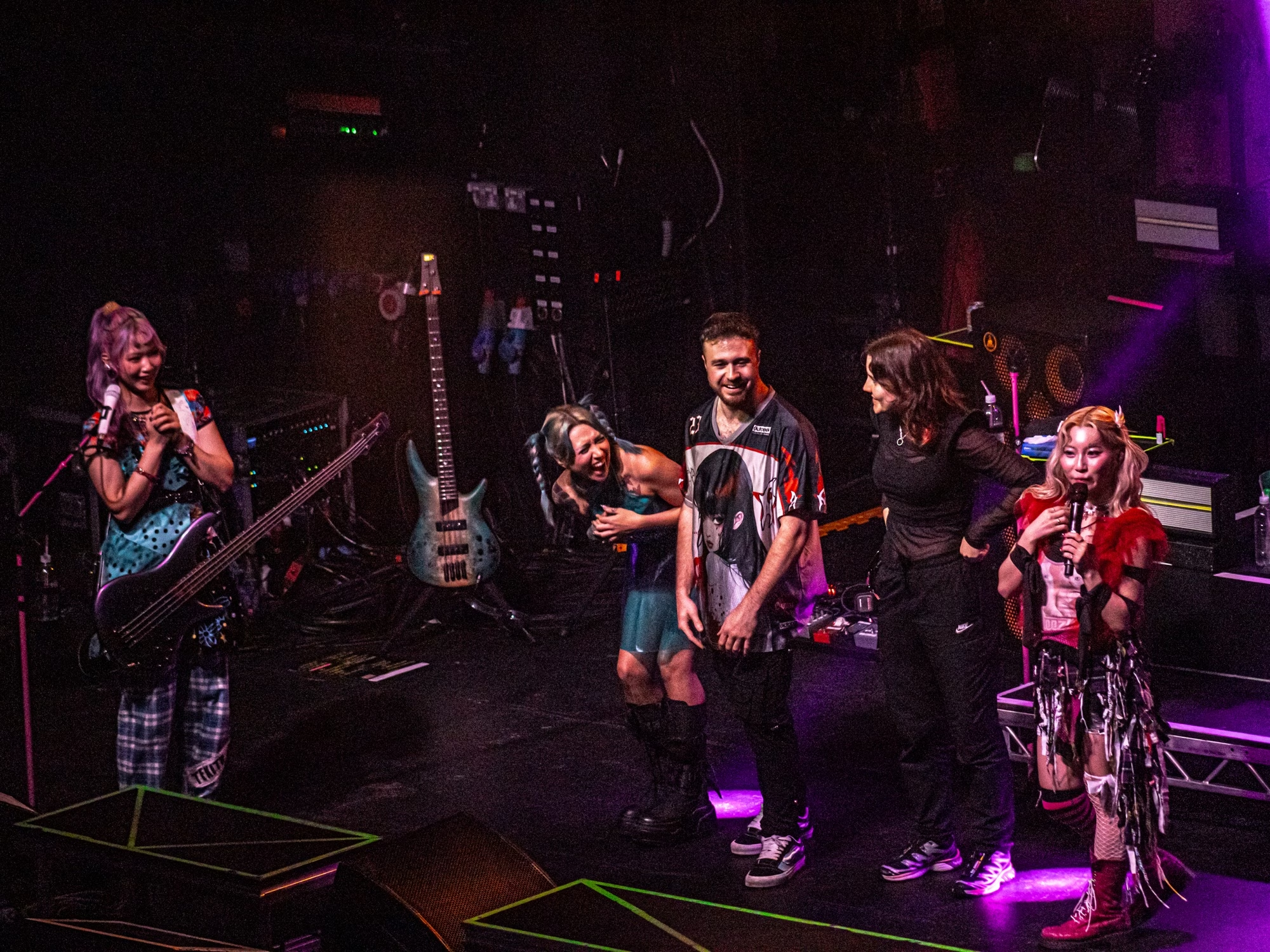
Hanabie are a Japanese metalcore band. Their music pushes boundaries and sonic norms. They are known for bringing unique energy into every performance!
BABYMETAL are a female Japanese Kawaii metal band and have brought this genre into the mainstream. They’ve also collaborated with the aforementioned Poppy and Courtney LaPlante.

Alex Reade is known for her insanely talented metalcore vocals. She was formerly a member of Drown This City and joined Make Them Suffer in 2022 as vocalist, guitarist and keytarist.
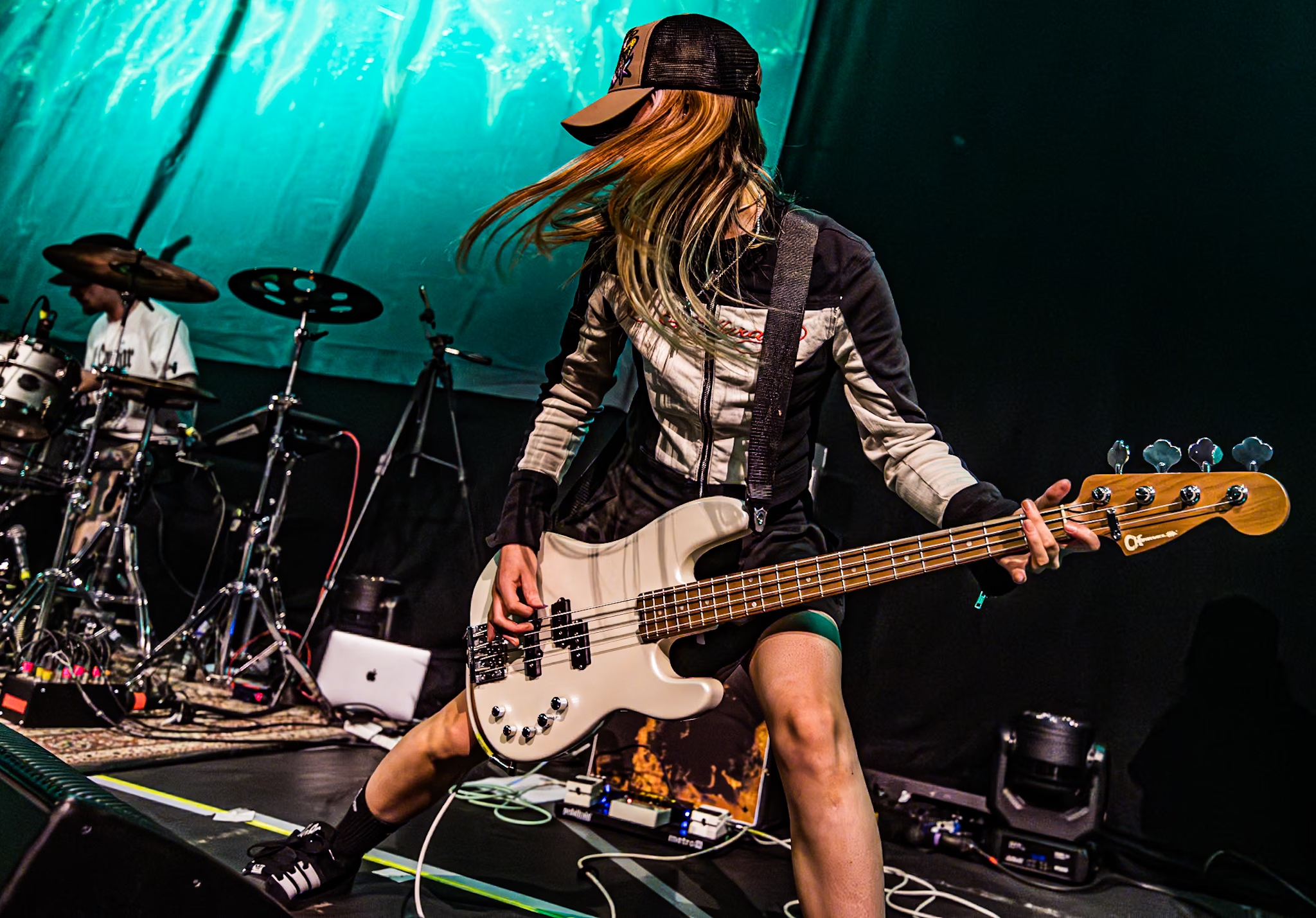
Lily Kilcoyne is an extremely talented bassist who exudes intense energy and attitude while performing with Guilt Trip, who are a metallic hardcore band from Manchester, UK.
Voice of Baceprot from Indonesia are a Muslim thrash metal band comprised of three women who wear hijabs. They aim to break stereotypes by combining their faith with heavy metal music while their music combats sexism and other issues women face daily.

Jinjer are a Ukrainian metalcore band fronted by Tatiana Shmayluk, who joined in 2009. She had previously made nu metal, reggae and funk music, while she has mastered all genres, she has excelled in metalcore.
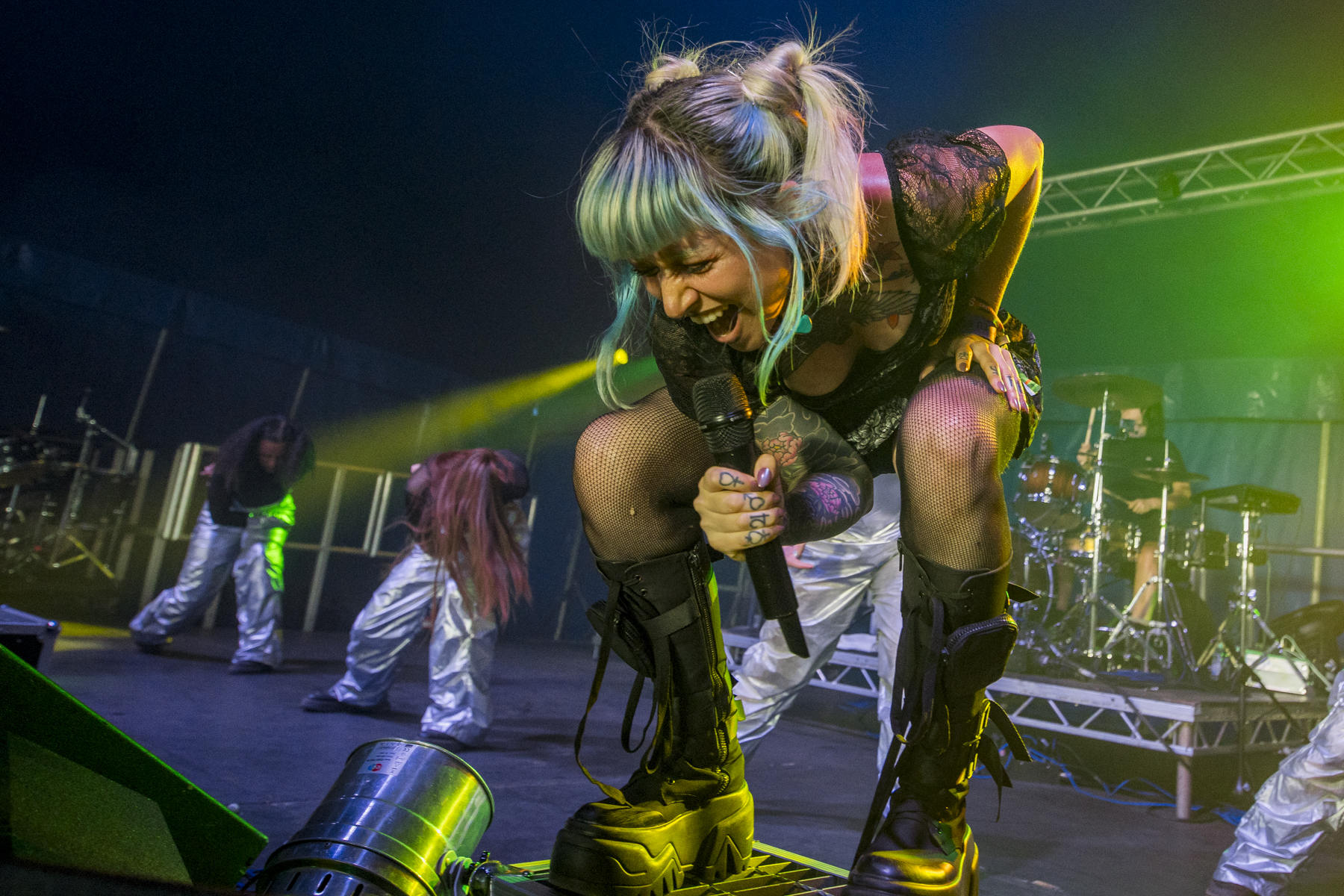
Alice Guala is the lead singer of Lake Malice, who are known for their stunning vocals, unique sounds and thought-provoking lyrics.
Women truly are the backbone that keeps the scene together. It would seem that there are more young females in attendance at live music shows than any other demographic. We are the creators and instigators of fan pages, artist promotion, artwork, music, and, thankfully, nowadays, also mosh pit starters. We hugely impact and support the scene financially, emotionally and have one of the biggest vocal presences and advocacy online for the artists we love. The space has become so much more inclusive, accessible and safe due to the women who are tirelessly and relentlessly supporting the scene.
Safe Gigs For Women was a UK charity that advocated for and protected women who attended gigs. They turned ten in 2025 while announcing their closing statement, much to the scene’s devastation, as they are so needed at gigs to keep them safe and inviting spaces for all people in attendance, so there’s a huge space to now be filled within the scene.
Fortunately, the number of females in the photography pit is growing. I spoke to Karolina Maylan, who has over seventeen years of professional photojournalism experience within the music industry. She expressed, “It definitely takes longer for female / non-binary photographers to get noticed. I definitely spent many long nights to show my work is up to par with male photographers.”
“I experienced once that a male reviewer who worked with me got an offer to get connected with large publications from another male industry colleague, while I had to continuously prove myself for certain jobs.”
“A lot of women in this industry do not feel like they can reach out to mental health specialists when they’re close or are directly experiencing burnout. It happened to me twice in my career, and only just recently I realized it’s not a shame to reach out for that kind of support when the industry is running a sprint race without a break. It’s ok to admit you need a break and support your mental health. Similarly, it’s also important to support your physical health too – especially in photography – a lot of people forget about how much equipment weighs, and it’s great to make sure your body supports it and avoid injuries. One thing I’d advise women is to keep working smart around the industry – have time for yourself and don’t run to every gig you see.”
“When talking about females burning out and having to do double jobs such as both photo and video; seeing some of the best in the industry – having at least in mind Corinne Cumming and Sarah-Louise Bennett – they don’t do double duty, and they are still incredibly accomplished at what they do.”
I spoke to Diana Revell, who has years of experience within the industry as a music journalist and photographer. She expressed;
“I do it for the love and use it as an outlet for my creativity. I know how little money there is in the music industry and how many photographers there are. I would never give up my job to pursue such a volatile industry.”
“It’s definitely harder to work in music photography as a woman, although personally, other than being ignored by male photographers in the photo pit, I haven’t directly experienced it. People make assumptions about women with cameras, especially in the heavier scene, I think, and even more so if you don’t present a certain way. There aren’t memes about “name me three songs…” for nothing. There’s also scepticism about technical competence, and more harassment from the general public; this I have encountered, but I just brush it off. I have nothing to prove to anyone, yet it’s unnerving at the time.”
“There’s definitely some sort of patriarchal oppression going on. I don’t think there’s a gender gap in terms of numbers, but in terms of opportunities. I also believe women perhaps avoid heavier pits as they can intensify crowd physicality. Also, these shows can be very male-coded, and sometimes it’s difficult to pass as “one of the guys”. So I understand why it may look like there is a gender gap in the photography scene, but I think if we look at the numbers, there isn’t. The same cannot be said about the music industry.”
When I asked Diana what support do you need within the industry, she replied;
“Mostly just being taken seriously when I show up. Not having to prove that I’m the photographer and not someone’s fan or plus one. Venues and security backing me up, not just the publication on my credential. Would be nice to see and chat to more women in the pits as well; I am sometimes under the impression we ignore each other in real life even though we all face the same problems.”
There is space for all of us; we have proved time and time again that we are influential, necessary and have never-ending talents that we can contribute to this beloved scene that we’ve helped shape. When I feel stressed or anxious before entering the photo pit or interviewing a band, I often pause for a moment and think of my younger self who would have never even know these opportunities could have been a possibility in the future for her. If she could see me now, she would think I’m the coolest person on this planet and that is my one of my reasons why I do this role and I will continue to advocate and support all of the women within the music industry and this scene bravely and wholeheartedly.