


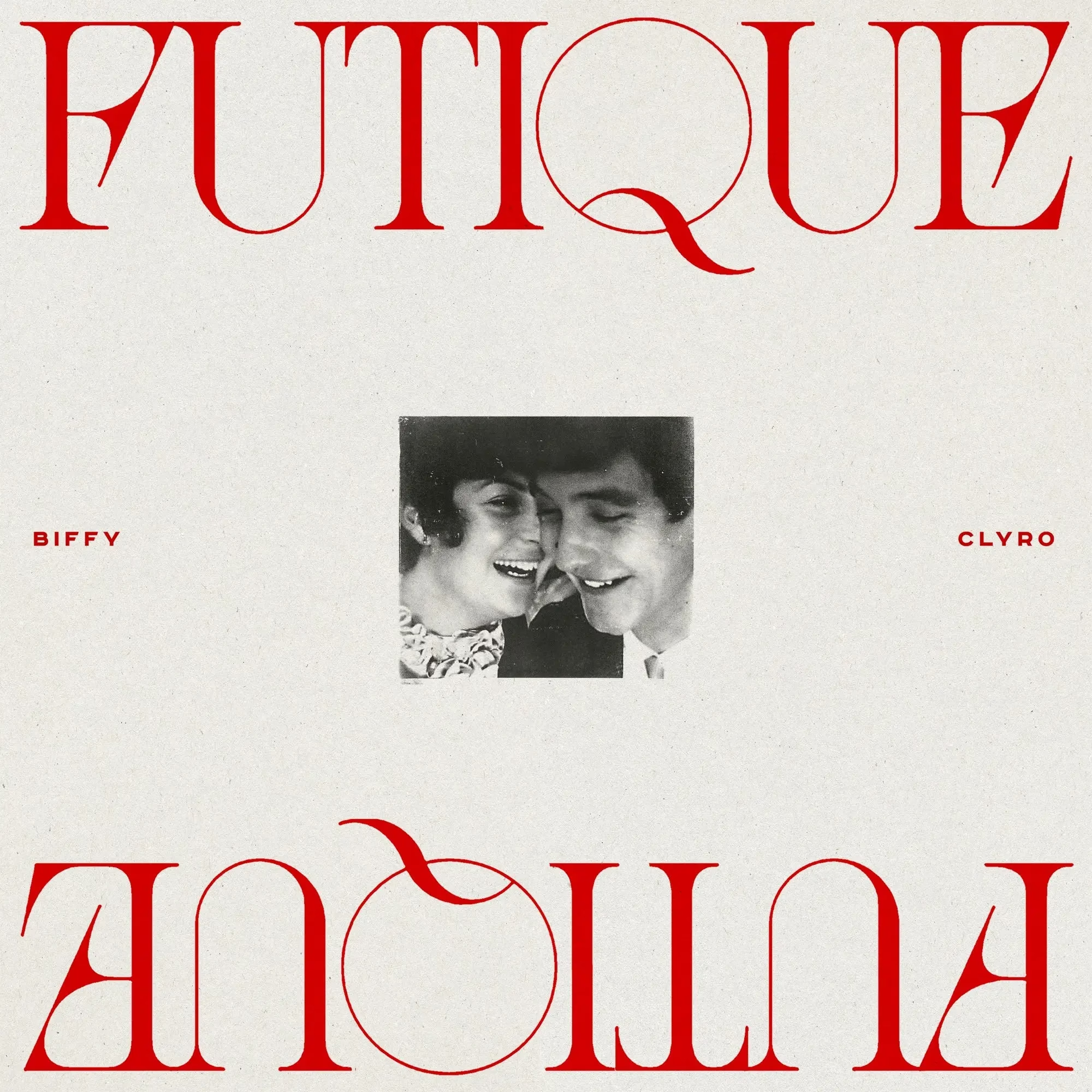
After a four-year gap, Scottish alternative rock group Biffy Clyro released their tenth studio album “Futique” on 26 September. Released via Warner Records and produced by Jonathan Gilmore, “Futique” debuted at number one in the UK Album Charts, with wider success seen by reaching the top ten in Austria and Germany. The album contains eleven tracks, four of which have already been released as singles: “A Little Love”, “Hunting Season”, “True Believer”, and “Goodbye”, which have also seen success in the UK Charts.
Hailing from Kilmarnock, Biffy Clyro are Simon Neil (vocals, guitars, piano), James Johnston (bass, backing vocals, synthesisers), and Ben Johnston (drums, backing vocals). Biffy Clyro have been active since 1995 and released their first studio album, “Blackened Sky” in 2002.
The album opener is “A Little Love”, which kicks off with a promising and catchy crescendo moment after a piano introduction, adding some real positive vibes to this track. Quickly followed by Simon Neil’s vocals, the instrumentals tend to repeat throughout, and the lyrics are cheerful and empowering, making this a very easy song to listen to. Old school Biffy Clyro fans might find similarities in the chorus with that of the 2009 hit single “The Captain”.
The second track is “Hunting Season”, which initially comes in a fair bit heavier than the previous track; it has an attitude to it, almost Kasabian-esque with how the guitars are played. There’s quite an odd rhythm to this track, where the chorus is actually slowed down from the rest of the song. The heavier close to the song ends similarly to how it begins, which we enjoyed.
The third track is “Shot One”, which comes across as a bit more of a power ballad sort of style. There’s some heavy synthesiser work, which lends a power pop feel in places. The highlight, though, is the percussion, where we were reminded of the late John Bonham’s drumming masterpiece “When the Levee Breaks”.
The fourth track is “True Believer”. This song starts off feeling like a slow burner, with vocals leading. Once the instruments kick in, though, the pace goes up a gear or three, reminding some of that pace and attitude from “Hunting Season”. We also found this track to be very well-rounded; the tempo and styles evolve and change throughout, with almost operatic sections breaking up the heavier instrumentals. There’s a “Bohemian Rhapsody” quality to this track, which adds real character to the album and showcases Biffy Clyro’s creative credentials.
The fifth track is “Goodbye”, which, like “Shot One”, is more of a ballad. Initially, it comes across as nostalgic, even mournful in places, speaking of saying, as the title suggests, goodbye. It does kick up around the halfway point but returns to the intro’s tone for the outro. Lyrically, it could be seen as not particularly subtle; the meaning behind this song is not hidden behind any kind of metaphor or euphemism, just said how it is. That’s not to say it isn’t meaningful, but we felt it could have been more developed.
The sixth track is “Friendshipping”, which picks the pace back up and presents as a solid indie banger. We enjoyed the short, sharp guitar riffs that come and go from the intro. There’s a catchy chorus that live audiences will likely enjoy, and despite being a guitar-led track, there’s just enough synthesiser to keep things varied. It’s a real showcase of why Biffy Clyro are right up there as heavyweights of UK indie and alternative rock, alongside the likes of Arctic Monkeys and Kasabian.
The seventh track is “Woe Is Me, Wow Is You”. Another slow burner at the start, the lyrics are moody and emotive, with deep feelings about trying to find a special place, a loving place. Despite a somewhat similar theme, this does sound more complex, especially lyrically, than “Goodbye”, which we enjoyed.
The eighth track is “It’s Chemical!”. A drum-heavy track led by its largely snare drum-based beat. While it might start off giving the impression of an alternative track, the blending of guitars with the synthesiser lends a progressive sound. It’s enjoyable, although we found that the prominent drums at times drew focus away from the vocals and other instruments.
“A Thousand And One” is the ninth track and is a slow, tender number. It speaks to deep emotions and feels like a personal journey. It’s an easy listen, and the themes are likely to resonate with fans.
The tenth track, “Dearest Amygdala”, expands on the progressive rock themes seen throughout the album. It’s surrealist in places, with intentionally out-of-tune synthesisers used to create contrast. The song is catchy and funky; we loved how the guitars, bass, and drums played a beat almost like a galloping horse. We enjoyed the quirkiness of this track and the variety it provided for the album. Don’t ask us how to pronounce “Amygdala” though, even the band themselves can’t make up their mind.
The closing track is “Two People In Love”. This track makes use of piano throughout, the gentleness of which contrasts well with the energy of the guitar and drum work. The energy of the track comes and goes in waves, an excellent metaphor for its theme. It’s the longest song on the album, approaching six minutes. It’s more than worth hanging on until the end, as it closes off with a real crescendo after all that build-up, giving hints of some of the best of progressive rock.
Overall, we’d have to say that “Futique” was a bit of a mixed bag, and we’re not sure that it was really for us. That’s not to say it’s a bad album, it certainly isn’t. While there are some excellent indie and alternative tracks and some genuine feeling behind the more emotive ones, the progressive rock elements lost us a bit.
Progressive rock is love it or hate it, there’s rarely middle ground, and we just found it getting a bit samey at times. What Biffy Clyro have done well is condense the progressive elements into easier listens than what traditional prog rock might offer. There’s every chance new listeners could be won over. Fans of Marillion, Genesis, IQ, and even Rush will find familiar and enjoyable sounds within this album.
The reverse might also be true. If Biffy Clyro’s gentler introduction to prog rock gets a new generation exploring the genre, that’s got to be a win. It’s an album worth giving a go. It could just be your cup of tea.