


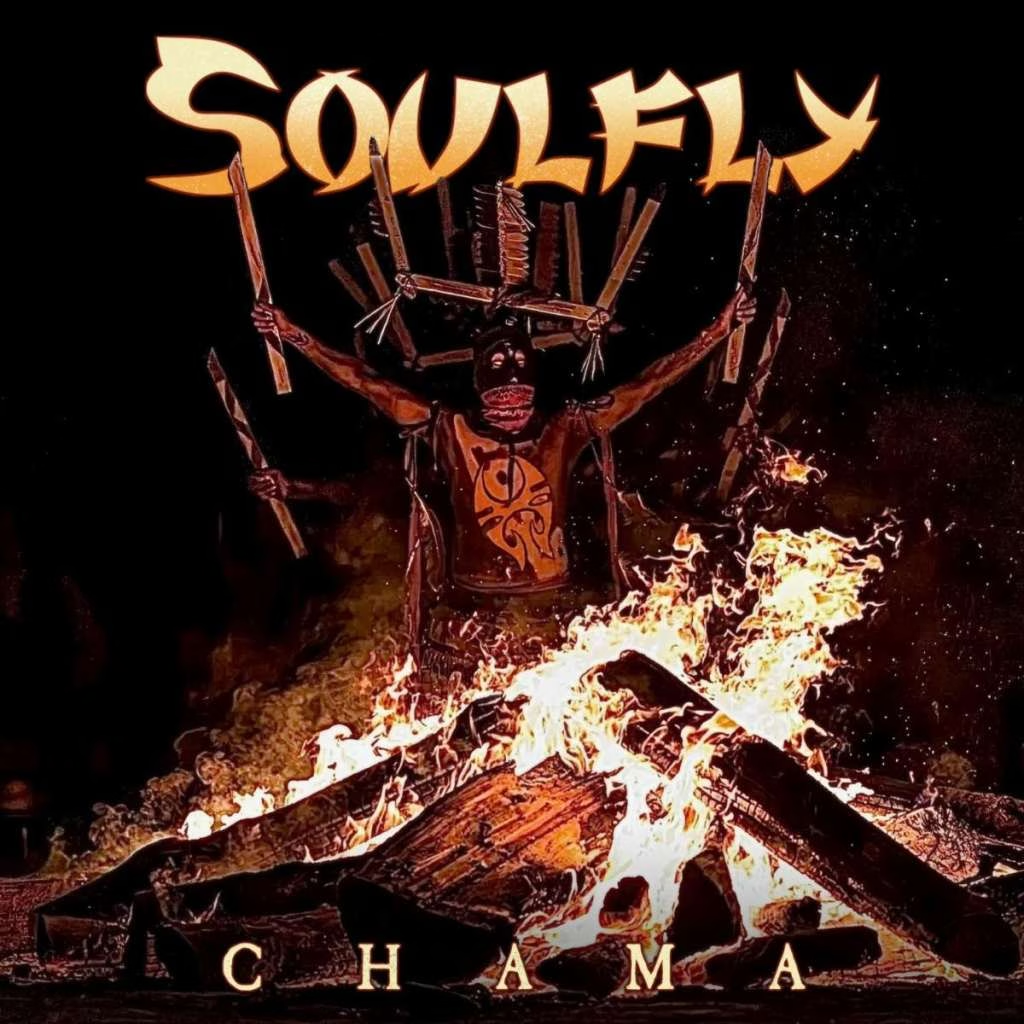
Soulfly‘s creative universe has been inactive since 2022. However, this fact changed when the band released their 13th studio album, Chama, at the end of October. In this creative phase, the band’s lineup naturally centred around its founder and metal icon Max Cavalera, joined by guitarist Mike DeLeon and, curiously, Max’s two talented sons: Zyon Cavalera on drums and Amadeus Cavalera on bass, who stepped in after Mike Leon left this past April.
Before we dive into the sonic and detailed analysis of the album, it is important to note that Chama is a symbolic work that pays homage to the indigenous people and their genocide. Starting with from this premise, the Cavalera family and the remaining members of the band construct a narrative that gives body to the album. A panoply of profound questions is clearly present and explored throughout the tracks: cultural identity, resistance, and social marginalisation are correlated with an intense struggle for the preservation of traditions. Here we find the link to the title, as Chama (flame) represents a form of cultural resistance against the prevailing power structures, those widely accepted by the majority and promoted as “good,” “correct,” and “normal.”
This new chapter for Soulfly unmistakably carries a strong sociopolitical and cultural edge, although for anyone who’s followed Max Cavalera’s career, as I have, that should come as no surprise. In truth, from a lyrical point of view, this is what he’s been getting the listeners used to since his glorious time in Sepultura. If we focus our attention on the track ‘Favela/ Dystopia’, we can see a clear allusion to the Brazilian favelas, their marginalisation, and the way life inside them becomes a social bubble marked by a relentless fight for survival within an unequal system ruled by oppression. This component of social reality is always present, reflecting a consciousness rooted in a tribal group ideology that inhabits a parallel world, distant from what mainstream society regards as “normal” daily life. These themes have been present through the Cavalera family’s soundtrack for over 30 years, and they grew stronger yet with the arrival of Soulfly, where the tribal aspect, indigenous sound, and sharp critiques of social inequality were taken even further.
Musically, the album isn’t defined by high speed but by deep grooves, modern metal elements that recall the band’s early period in the late ’90s and early 2000s, along with its distinctive sound built on unconventional rhythms. In fact, the band explore heavy rhythms and mix them with modern and industrial layers that give it a significantly more sombre tone. With indigenous, melodic, and tribal percussion at its core, this sound served as the driving force that carried the Cavalera brothers from Brazil to international renown.
When it comes to the album’s standout moments, ‘Storm the Gates’ takes the spotlight. Brimming with raw energy and intense riffs, the track’s true signature, in my view, lies in its powerful drum breakdowns. From a lyrical point of view, the song reflects the thematic highlights mentioned before. The “gates” serve as a metaphor for the system that must be challenged, with the lyrics’ confrontational spirit aligning seamlessly with the music’s rebellious, freedom-seeking intensity.
Joining this high point of the album, tracks like ‘Nihilist’ stand out, offering a critique of modern times and their alienation, as well as the title track ‘Chama’, which closes the album in a destructive manner and embodies the courage and will to be reborn and keep the fight burning, with justice and liberty as its ultimate goal.
With aggressive riffs, heavy and layered with modern elements that create a dark, chaotic atmosphere, and drums driving a constant, pulsating rhythm, accompanied by Max Cavalera’s unmistakably furious voice, Soulfly deliver a creative work that stands apart not just through its themes, but also through the musical elements it adds. Here, the riffs are complemented by the traditional components of heavy metal, fused with more modern, developed, and industrial aspects. For anyone who appreciates Cavalera’s intensity and the distinct Brazilian rhythms and grooves he has brought to the genre we love, these powerful 32 minutes that make up Chama are essential listening.
To conclude on a personal note, I had the chance to see Soulfly live this year, and they continue to deliver a completely demolishing performance. Here’s hoping they return to our country soon, to once again unleash the wild energy they shared in 2022, and if not, may 2026 bring us a special visit from the Cavalera brothers.
.