
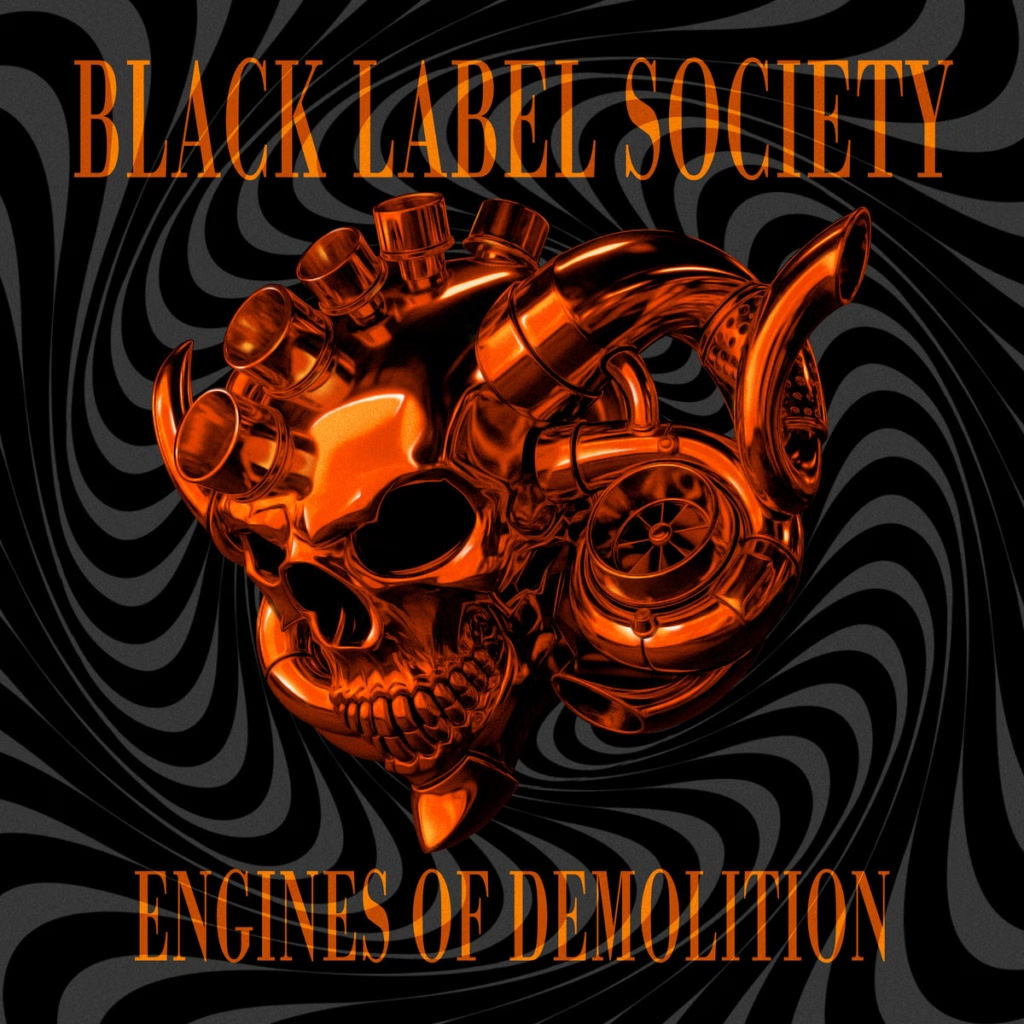
Black Label Society have never been a band to follow trends, and that goes a long way in explaining the longevity of the project led by Zakk Wylde. Since the late 1990s, the group has built a very distinct sound within Heavy Metal, grounded in a combination of heavy riffs and a clear groove that has always defined Wylde’s style, along with strong influences from Southern Rock and Blues. That identity remains the foundation of Engines of Demolition, an album that arrives after a five-year gap and reinforces, rather than reinvents, what the band stands for.
To fully understand this sound, it is essential to look at Zakk Wylde’s trajectory. Before forming Black Label Society, the guitarist rose to prominence as a member of Ozzy Osbourne’s band during a crucial phase of the singer’s career. That period helped shape Wylde’s style: a balance between heaviness and melody, marked by expressive solos and a deeply emotional approach to guitar playing. This is evident, for those who have followed his career alongside the Prince of Darkness, not only in the core of No More Tears, but also in more recent works such as Patient Number 9, where that heavy sound infused with country and blues elements is consistently present. Over the years, this DNA was naturally carried into his work with Black Label Society, where he had complete freedom to refine and solidify his own musical language.
Engines of Demolition fits perfectly within this sense of continuity. The album does not aim for innovation or drastic change; instead, it leans into consistency, offering no major surprises for fans expecting something different. From the very beginning, it is clear that the foundation remains the same: dense, groovy riffs, mid-tempo pacing, and straightforward structures focused on effectiveness. There is a clear reluctance to overcomplicate the songs—something that has always defined Zakk Wylde’s approach—which ultimately makes his discography accessible not only within the metal world but beyond it.
Looking more closely at what is the band’s twelfth studio album, it becomes clear that this is a continuation of the “Zakk Wylde formula,” where songs rely on simple, direct structures built around a central riff. This results, in my view, in a very smooth and easy listening experience. Tracks like “Name in Blood” exemplify this approach: there are no major deviations, but there is confidence in execution and a well-defined identity. It is here that the band’s connection to traditional Heavy Metal is most evident, with enough groove to maintain momentum without resorting to excessive speed or technical complexity.
The same applies to “The Gallows,” which stands out as the strongest track on the album. It clearly echoes the heavy riffing style pioneered by Black Sabbath, while incorporating more modern elements. At the same time, Zakk Wylde delivers a rougher vocal performance, bringing out a darker edge, accompanied by one of his signature trademarks: his unmistakable vibrato-driven guitar solos, instantly recognisable to any rock or metal fan.
Moving forward, the ballad “Back to Me,” placed mid-album, breaks sharply from the established pattern by adopting a more restrained and emotional approach. Unlike the heavier tracks, the focus here is on melody and gradual development, standing out in part due to the near absence of a traditional solo-driven bridge. In parallel, the second half of the album features several mid-tempo, ballad-like songs that highlight not only a more emotional side of the band but also Wylde’s continued strength as a songwriter, something long evident in many of Ozzy’s most iconic tracks.
One of the most noticeable aspects of Engines of Demolition is how consistently the songs follow similar patterns. The core structure—opening riff, verse, chorus, and solo—repeats throughout the album, reinforcing cohesion but limiting surprise. This is not a new issue for the band, nor does it seem to concern Wylde. The priority remains consistency and fidelity to a style that audiences already recognise. For some listeners, this may feel somewhat repetitive or even tiring, but the reality is that within the metal genre, the sound of Wylde and Black Label Society remains almost unique, blending a wide range of influences like those mentioned throughout this analysis.
The production follows the same logic. The sound is clean, heavy, and balanced, with guitars at the forefront and a solid rhythmic section that supports without dominating. Everything is designed to serve the songs in the most direct way possible, contributing to the sense of a stable and confident album, even if it lacks risk.
The most significant moment arrives at the end of the record. The closing track, “Ozzy’s Song,” serves as a heartfelt tribute to Ozzy Osbourne, ending the album with an emotional weight that goes beyond the musical framework of the preceding tracks. Here, the approach shifts noticeably: the song begins in a more restrained manner, gradually building in a way that prioritizes melody and feeling over immediate heaviness. As it progresses, that restraint evolves into a more intense climax, where Zakk Wylde delivers one of the most personal compositions of his career, reflecting on Ozzy’s departure as something inevitable, yet too sudden, while affirming that his legacy will endure: “The skies may cry, but I’ll be holding on, holding on.”

For many longtime followers of Black Label Society, this powerful tribute inevitably recalls the one Wylde made to Dimebag Darrell with the timeless “In This River” after his tragic death on stage.
Considering the relationship between Wylde and Ozzy, this choice is not merely symbolic—it is deeply personal. Over decades, their collaboration helped shape an important part of Heavy Metal as we know it, and this final track stands as a recognition of that journey. It is worth remembering that it was Ozzy, when Wylde was just 20 years old, who recruited him for No Rest for the Wicked in 1988. From that point on, the rest is nothing short of history. As such, this ending is not a break from the album, but rather a conclusion that gives it additional context and meaning.
Overall, Engines of Demolition is not an innovative or particularly daring album, but it clearly accomplishes what it sets out to do. It is a solid, coherent record that remains faithful to the identity of Black Label Society, reinforcing the band’s place within a very specific space in Heavy Metal, where heaviness coexists with southern influences and a constant emotional undertone. Rather than marking a new phase, the album serves as a reaffirmation: that Zakk Wylde continues to invest in a musical language of his own, built over many years, and one that still holds relevance within the space he has rightfully earned.